So as i have said in a previous thread i picked this up today from Doncaster air museum ive been wanted one a kit of a tempest for along time so when i saw it i just had to have it. Boy what a kit photo etched parts resin parts and masks all for £15.
The box art is amazing.
right on with the kit shots the detail is really clear and crisp the plastic has a shiny coat it so will have to prime me thinks the panel lines are really delicate so will have to be care full when sanding.
not the best shot of the clear parts but they are great really clear LOL
two bits of Photo etched one for the cockpit and one for the rest
the resin parts of the cockpit
the decals very good and thin but glossy
the instructions really easy to follow and in colour
and the version (1 of 6) i will be doing
So this will be a few 1st for me 1st eduard kit, 1st use of photo etched and 1st use of resin.
When i do my research i will find out some history about both man and machine.
So wish me luck guys.
The first production Tempest V JN729. Small blisters covering the spar securing bolts are visible on the wing root fairing. Long-barreled Hispano II cannon and Typhoon five-spoke mainwheels were other features identifying the first production batch of 100 Tempests Vs.
Even before the first flight of the prototype Tempest V a production order for 400 Tempests was placed by the Air Ministry.The order was split, with the initial batch of 100 being Tempest V "Series Is", powered by the 2,235 hp (1,491 kW), Napier Sabre IIA series engine with the chin radiator, while the rest would be the Tempest I with the Napier Sabre IV and leading-edge radiators. As it transpired the difficulties with the Sabre IV meant that this version never reached production and the order was switched to 300 Tempest V "Series 2"s. The first production Tempest V, JN729 was first flown by test pilot Bill Humble on 21 June 1943. Several of the early production aircraft underwent extensive service trials at Boscombe Down including clearances to be fitted with external stores, including 500 lb (227 kg) and 1,000 lb (454 kg) bombs and 3 in (76.2 mm) RP-3 rockets, although few Tempest Vs used such ordnance operationally during World War II.
Examination of captured Fw 190s brought about improvements in the windscreen/ side windows; by careful design and positioning of the frame structure blind spots were reduced to an absolute minimum. The three-piece windscreen had a bullet-resistant centre panel made up of two layers, the outer 1.5 in (38mm) thick and the inner 0.25 in (6.5 mm).
During production of the first batch of 100 Tempest V "Series Is", distinguished by their serial number prefix JNxxx, several improvements were progressively introduced and were used from the outset on all succeeding Tempest V "Series 2s", with serial number prefixes EJ, NV and SN. The rear fuselage fuselage/empennage joint originally featured 20 external reinforcing "fishplates", similar to those fitted to the Typhoon, but it was not long before the rear fuselage was strengthened and, with the fishplates no longer being needed, the rear fuselage became detachable. The first series of Tempest Vs used a built-up rear spar pick-up/bulkhead assembly (just behind the cockpit) which was adapted from the Typhoon. Small blisters on the upper rear wing root fairing covered the securing bolts. This was later changed to a new forged, lightweight assembly which connected to new spar booms: the upper wing root blisters were replaced by small "teardrop" fairings under the wings.[17] The new spar structure also allowed the wings to carry up to 2,000 lb (907 kg) of external stores. Also developed specifically for the Tempest by Hawker was a streamlined 45 gal (205 l) "drop tank" and carrier fairing; the redesigned wing incorporated the plumbing for these tanks, one to each wing. The ailerons were fitted with spring-loaded tabs which lightened the aerodynamic loads, making them easier for the pilot to use and dramatically improving the roll rate above 250 mph (402 km/h). Starting with EJxxx series Tempest Vs the improved Sabre IIB and IIC were used, both of which were capable of producing over 2,400 hp (1,789 kW) on emergency boost for short periods of time. All versions of the Sabre drove four-bladed, 14 ft (4.267 m) diameter de Havilland Hydromatic or Rotol propellers.
The first 100 Tempest Vs used long-barrelled 20 mm (.79 in) Hispano Mk.IIs the barrels of which projected ahead of the wing leading edges and were covered by short fairings, while later production Tempest Vs switched to the short-barrelled Hispano Mk.Vs the muzzles of which were flush with the leading edges. Finally, while early Tempest Vs used Typhoon style 34 by 11 inch (83.4 by 28 cm) five-spoke wheels, the majority used smaller 30 by 9 inch (76.2 by 22.9 cm) four-spoke wheels.
As in all mass-produced aircraft, there may have been some overlap of these features as new components became available. In mid to late 1944 other features were introduced to both the Typhoon and Tempest: A Rebecca transponder unit was fitted, with the associated aerial appearing under the portside centre section. A small, elongated oval static port appeared on the rear starboard fuselage, just above the red centre spot. This was apparently used to more accurately measure the aircraft's altitude.
SN345 with experimental 47 mm class P guns. This is fitted with the standardised smaller four-spoke wheels.
Unusually, in spite of the Tempest V being the RAF's best low to medium altitude fighter, it was not equipped with the new Mk IIC gyroscopic gunsight, an asset which was fitted in RAF Spitfires and Mustangs from mid-1944 and one which considerably improved the chances of shooting down opposing aircraft. Tempest pilots continued to use either the Type I Mk.III reflector gunsight, which projected the sighting graticule directly onto the windscreen, or the Mk.IIL until just after the Second World War, when the gyro gunsight was introduced in Tempest IIs.
Two Tempest Vs, EJ518 and NV768, were fitted with Napier Sabre Vs and experimented with several different Napier made annular radiators, with which they resembled Tempest IIs. This configuration proved to generate less drag than the standard "chin" radiator, contributing to an improvement in the maximum speed of some 11 to 14 mph. NV768 was later fitted with a ducted spinner, similar to that fitted to the Fw 190 V1.
Another experimental Tempest V was SN354, which was fitted with two Vickers 47 mm "P" guns, one under each wing in a long "pod".
Tempest V in combat
Early production Tempest V of 486 Sqn. April 1944. JN766 still has factory applied black and white Typhoon style underwing recognition bands.
The Tempest V was in the hands of operational squadrons by April 1944; 3 Squadron was the first to be fully equipped, closely followed by 486 (NZ) Squadron (the only Article XV unit to be equipped with the Tempest during the Second World War). A third unit—56 Squadron—initially kept its Typhoons and was then temporarily equipped with Spitfire IXs until sufficient supplies of Tempests were available. By the end of April 1944, these units were based at RAF Newchurch a new Advanced Landing Ground (ALG), where they formed 150 Wing, commanded by Wing Commander Roland Beamont. The new Wing was part of the Second Tactical Air Force (2nd TAF).
Most of the operations carried out by 150 Wing comprised high altitude fighter sweeps, offensive operations known as "Rangers" (long-range sorties inside enemy territory, specifically to attack ground vehicles) and anti-shipping reconnaissance. In June 1944, however, the first German V-1 flying bombs were launched against London and the Tempest's excellent low-altitude performance made it one of the preferred tools for dealing with the small fast-flying unmanned missiles. 150 Wing was transferred back to the ADGB, where the Tempest squadrons racked up a considerable percentage of the total RAF kills over the flying bombs (638 of a total of 1,846 destroyed by aircraft).
Early Tempest V of 3 Sqn. at Newchurch. Note Invasion stripes painted on by the ground crew; the longer cannon barrels can be seen on the port-side wing.
In September 1944, Tempest units, based at forward airfields in England, supported Operation Market Garden, the Airborne attempt to seize a bridgehead over the Rhine. On 21 September 1944, as the V1 threat had receded, the Tempest squadrons were redeployed to the 2nd TAF, effectively trading places with the Mustang III squadrons of 122 Wing, which became part of the ADGB units deployed on bomber escort duties.[33] 122 Wing now consisted of 3 Sqn., 56 Sqn., 80 Sqn., 274 Sqn. (to March 1945), and 486(NZ)Sqn. From 1 October 1944 122 Wing was based at B.80 Volkel Air Base near Uden, in the Netherlands.[33] In February 1945 33 and 222 Sqns. of 135 Wing converted from Spitfire Mk IXs and, in March, were joined by 274 Sqn. 135 Wing was based at B.77 Gilze-Rijen airfield in Holland.
The Tempest's primary role was to carry out "armed reconnaissance" operations deep behind enemy front lines. The Tempest was particularly well suited to the role because of its high speed at low to medium altitudes, its long range when equipped with two 45 gallon drop tanks, the good firepower of the four 20mm cannon and the good pilot visibility.[35] Armed reconnaissance missions were usually flown by two sections (eight aircraft), flying in Finger-four formations, which would cross the front lines at altitudes of 7,000 to 8,000 feet: once the Tempests reached their allocated target area the lead section dropped to 4,000 feet or lower to search for targets to strafe, while the other section flew cover 1,000 feet higher and down sun. After the first section had carried out several attacks it would swap places with the second section and the attacks would continue until ammunition had been exhausted, after which the Tempests would return to base at 8,000 ft. Because the most profitable targets were usually some 250 miles from base the Tempests usually carried two 45 gallon drop tanks which were turned on soon after takeoff. Although there were fears that the empty tanks would explode if hit by flak, the threat never eventuated and, because they could be difficult to jettison, they were routinely carried throughout an operation with little effect on performance, reducing maximum speed by 5 to 10 mph and range by 2%.
In December 1944, 52 German fighters were downed and 89 trains destroyed, for the loss of 20 Tempests. Following the Luftwaffe's Operation Bodenplatte of 1 January 1945, 122 Wing bore the brunt of low to medium altitude fighter operations for the Second Tactical Air Force. Spitfire XIVs of 125 and 126 Wings often provided medium to high altitude cover for the Tempests. The Wing came under intense pressure, losing 47 pilots in January.
Tempests also scored a number of kills against the new German jets, including the Messerschmitt Me 262. Hubert Lange, a Me 262 pilot, said: "the Messerschmitt Me 262's most dangerous opponent was the British Hawker Tempest — extremely fast at low altitudes, highly-manoeuvrable and heavily-armed."[38] Some Me 262s were destroyed with a tactic known to 135 Wing as the "Rat Scramble" Tempests on immediate alert took off when an Me 262 was reported to be airborne. They did not intercept the jet, but instead flew towards the Me 262 and Ar 234 base at Rheine-Hopsten. The aim was to attack jets on their landing approach, when they were at their most vulnerable, travelling slowly, with flaps down and incapable of rapid acceleration. The Germans responded by creating a "flak lane" of over 150 quadruple 20 mm (.79 in) guns at Rheine-Hopsten, to protect the approaches. After seven Tempests were lost to flak at Rheine-Hopsten in a single week, the "Rat Scramble" was discontinued. For a while, in March 1945, a strict "No, repeat, No ground attacks" policy was imposed; this only applied for a few days.
In air-to-air combat, the Tempest units achieved an estimated air combat success ratio of 7:1, accomplishing a 6:1 ratio against single seat enemy fighters. The top scoring Tempest pilot was Squadron Leader David C. "Foobs" Fairbanks DFC, an American who joined the Royal Canadian Air Force in 1941. By mid-1944, he was flying with 274 Squadron. When he was shot down and made a POW in February 1945, he had destroyed 11 or 12 German aircraft (and one shared) to make him the highest scoring Tempest ace.
Just a bit of history on the aircraft the pilot next
Beamont's operational career began in 1939, flying Hawker Hurricanes with No. 87 Squadron RAF stationed at Lille in France with the air contingent of the British Expeditionary Force, scoring 3 'kills' against German aircraft. With the withdrawal of British forces from the continent following the fall of France he took part in the Battle of Britain, claiming 3 more 'kills', after which he was involved with nightfighting trials with the Hurricane. He was awarded a Distinguished Flying Cross in June 1941, and was posted to No. 79 Squadron RAF, although he was court-martialled for transporting a WAAF to a dance at another RAF station in his single-seat Hurricane, and was severely admonished.
In December 1941 he was attached to Hawker's at Langley as a Production and Experimental Test Pilot. In July 1942 he was back on operational flying, joining No. 609 Squadron RAF flying Hawker Typhoons and subsequently promoted to Squadron Commander. As Commanding Officer of one of the first Squadrons to operate the new and technically troublesome Typhoon, Beamont was instrumental in arguing for keeping the aircraft in RAF service against increasing establishment resistance while he assisted Hawker's in resolving the type's airframe and engine problems. His confidence in the Typhoon was vindicated as the aircraft eventually became the RAF's most successful ground-attack aircraft during 1944-5.
In 1943 he returned to Hawker's as a test pilot, performing experimental testing of the Hawker Tempest alongside the Hawker's test pilot, Bill Humble. In 1944, prior to D-Day, he again resumed operational flying, this time forming the first Tempest Wing (No. 150) with the rank of Acting-Wing Commander, the Wing accounting for three Me 109s over the invasion beaches shortly after D-Day without loss, two credited to Beamont. At this time the Wing were switched to intercepting V-1s over Kent, shooting down 638, Beamont accounting for 32 of the unpiloted-flying bombs himself. On 2 October 1944, now based on the continent at Volkel, Holland, he achieved his ninth and final kill of the war when he shot down a Fw 190 near Nijmegen. On 12 October, while attacking a heavily defended troop-train near Bocholt on his 492nd operational mission he was shot down, becoming a Prisoner of War. Confined firstly to Stalag-III at Sagan, near Breslau, then to Stalag III-A at Luckenwalde, near Potsdam, he remained a PoW until the end of the war in Europe, being finally repatriated in late May 1945 after being further detained with the other former POWs by the Russians.
With the end of hostilities his planned transfer to the Far East in command of a Wing of Tempest IIs was cancelled and he applied for a permanent commission. The eventual offer of a permanent commission coincided with his being offered a position as a test pilot; he resumed his career as a test pilot, performing the initial test flying of many notable aircraft, including the Canberra and Lightning, as well as the later-cancelled BAC TSR-2. In 1948, while visiting the US to fly the North American B-45 Tornado bomber, he was able to persuade the US authorities to give him permission to fly one of the only two XP-86 Sabres then built, based at Muroc Field. Briefed by test pilot George Welch, Beamont flew the XP-86 in May of that year, breaking the sound barrier (exceeding Mach 1) on his one and only flight in the aircraft, the third person to do so in the XP-86.[2] He subsequently went on to become a director of the Warton division of BAC, later BAe, as a Director of Flight Operations. From 1970 he was responsible for the international testing of the Tornado MRCA. In 1979 he retired, devoting himself to writing and contributing to various aeronautical publications. He died on 19 November 2001 at the age of 81.
Beamont has the distinction of being the first pilot to make a double-atlantic crossing by jet, when on 26 August 1952, flying Canberra B.5 VX185, he flew from Aldergrove to Gander and then back again to Aldergove, in 10 hours 3 minutes. In 2002 he was posthumously awarded the Belgian Croix de guerre.
Cheers Gav didn't think of sanding it but will be priming it.
Guppy one of my fave aircraft as so I'm really looking forward to doing it and hope to do it justice.
After doing some research on the kit there are a few problems. One being that with the resin floor of the cockpit will need to be left of so it will fit because of the undercarriage bays but will cover this in more detail during the build.
It ok will be going during the summer holidays so will take some photos not big but got quite a few cockpits and a few helicopters. The shop is the best one near me for get models from. http://www.southyorkshireaircraftmuseum.org.uk/ here's the web site.
I wonder if they marked it the wrong model up then because it had a a4 bit of paper underneath it with a big £15 sign pointing to it. And didn't see another. Got there just has it opened so was 1st through the door wonder if it was ment to be a different kit.
Nige201980 wrote:I wonder if they marked it the wrong model up then because it had a a4 bit of paper underneath it with a big £15 sign pointing to it. And didn't see another. Got there just has it opened so was 1st through the door wonder if it was ment to be a different kit.
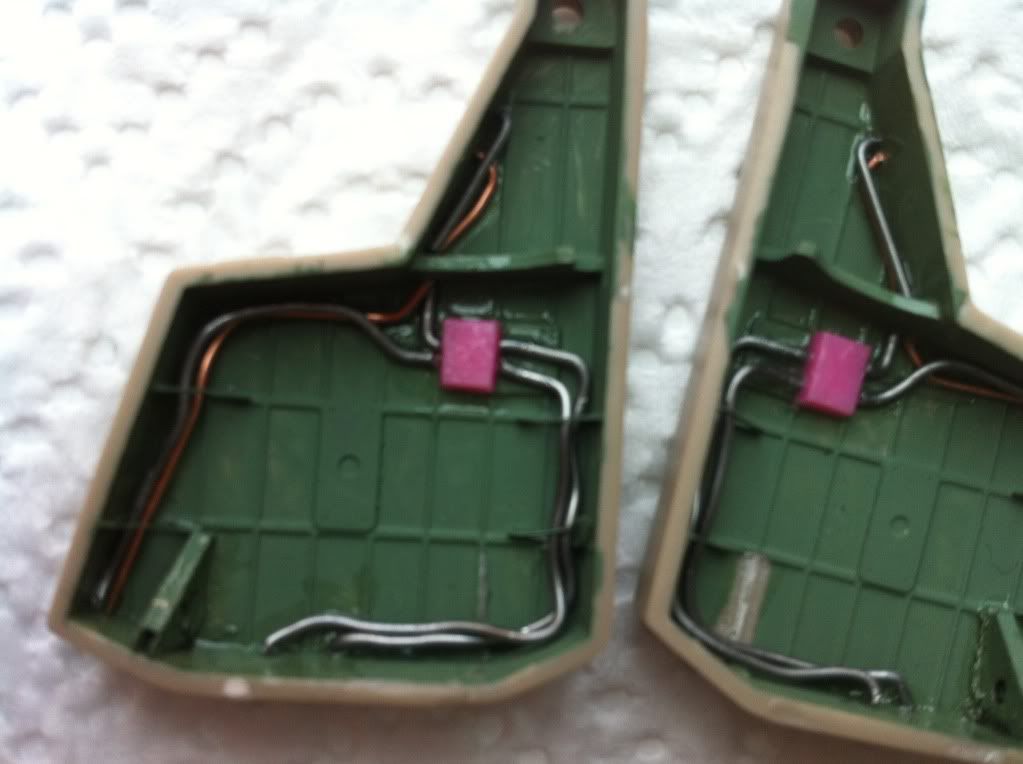
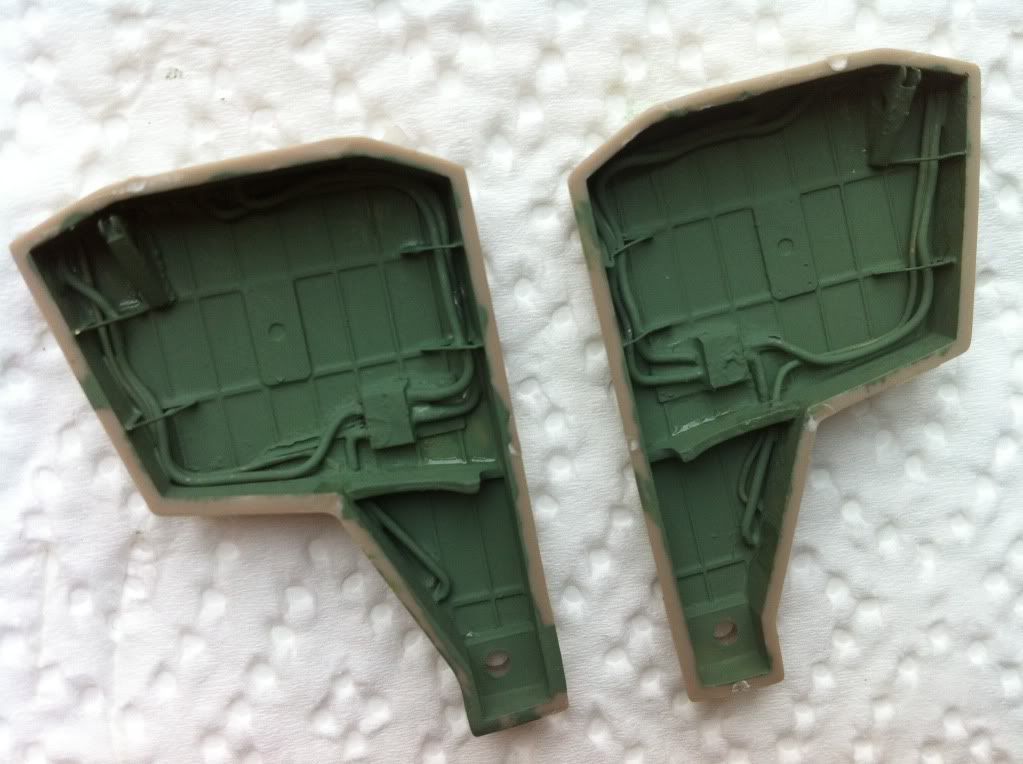
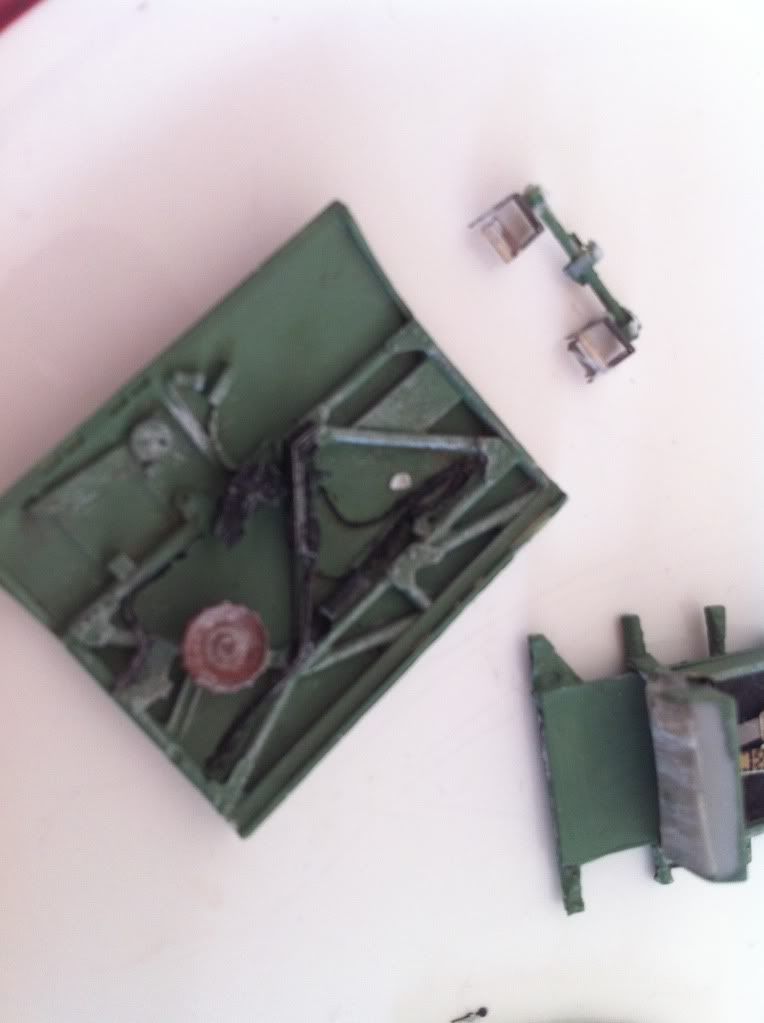
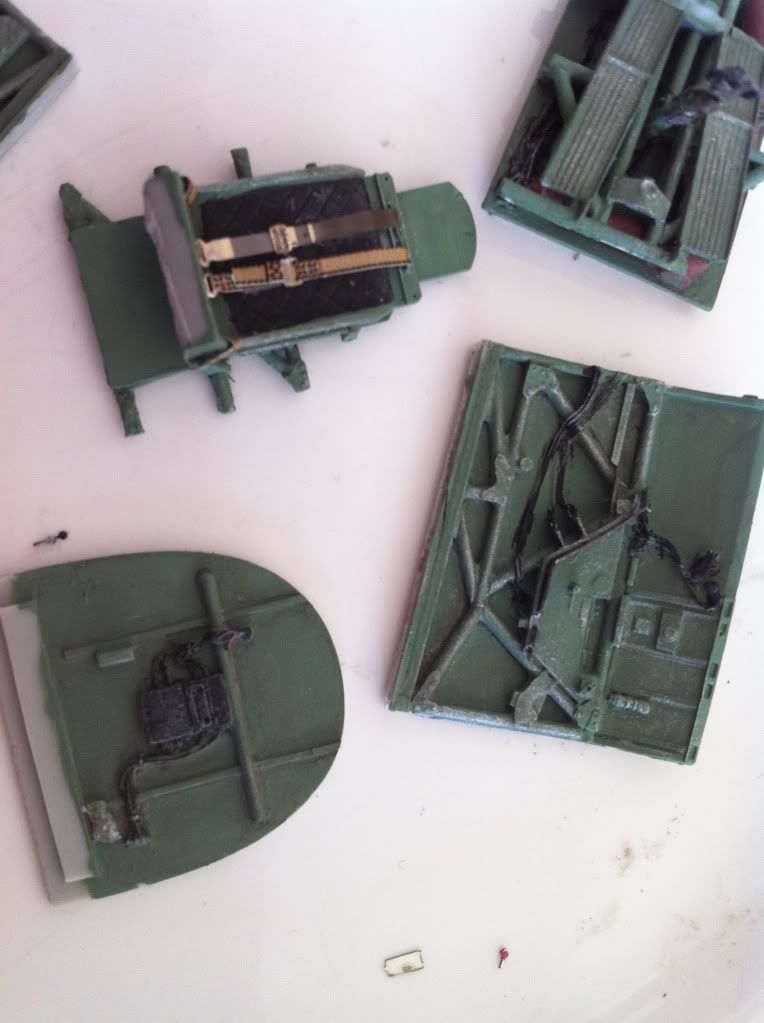
Cockpit all painted with humbrol 78 and cables done in black gave it a dark brown wash and dry brushed with humbrol 56 I think.
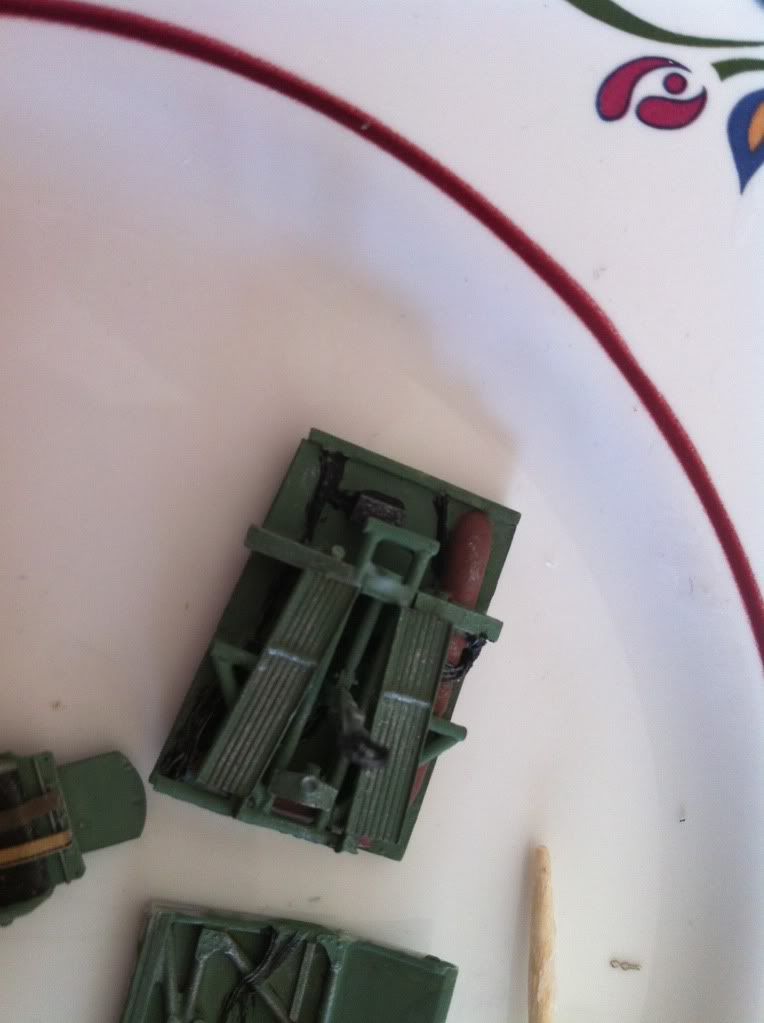
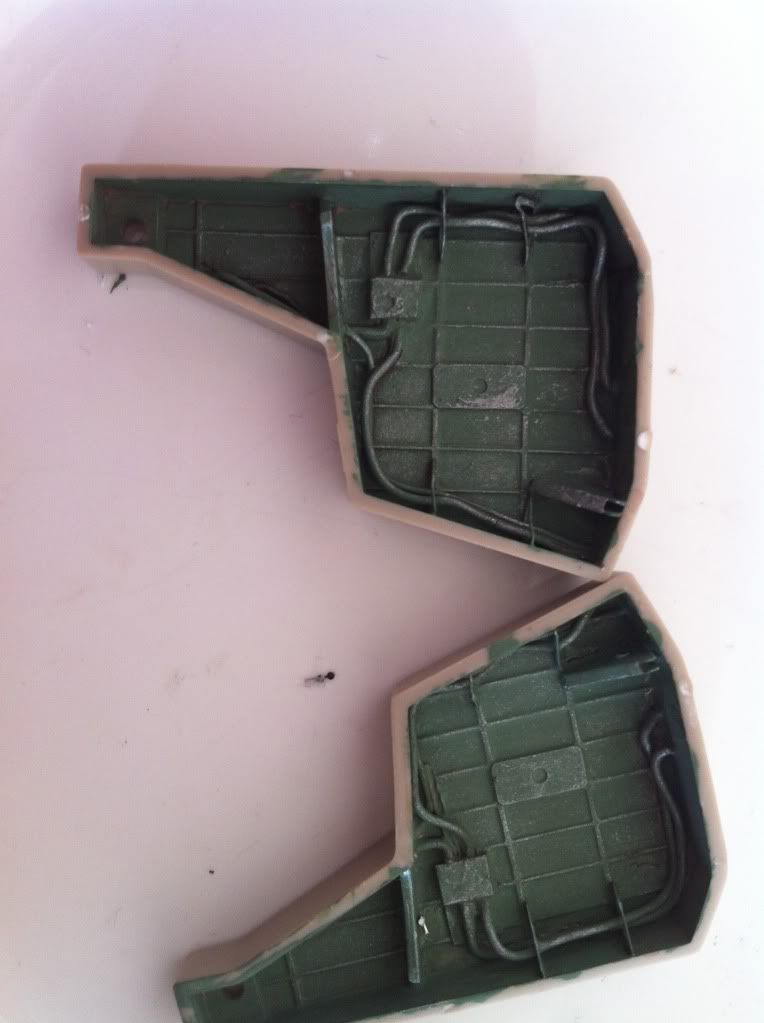
Also painted and weathered the undercarriage bays.
Not all the PE has been used because of the small bit pinging of when I tried to use them.
But I think it looks ok for the 1st time I used it.
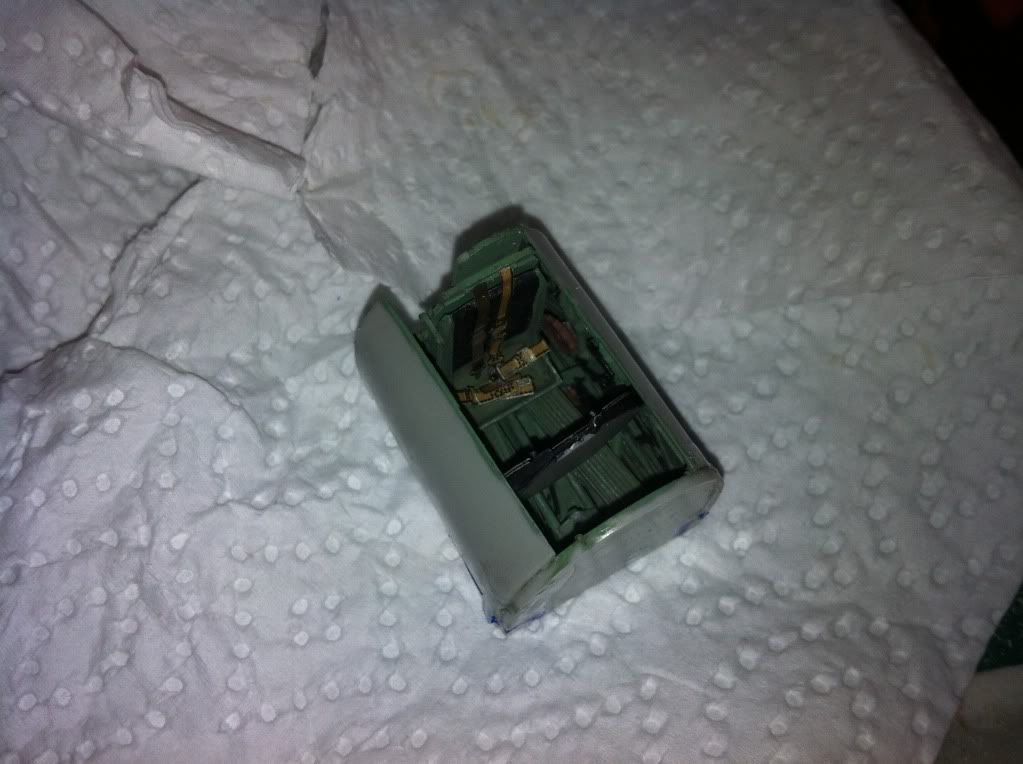
Well the cockpit is now together and looks good but trouble is on the horizon but 1st the the cockpit
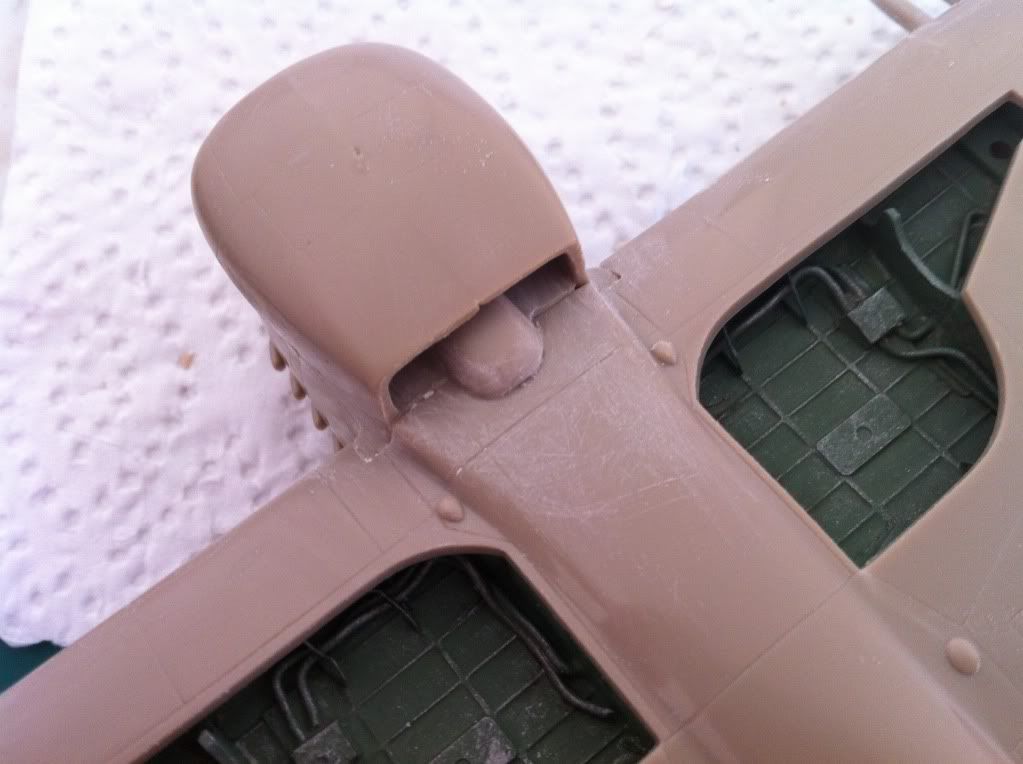
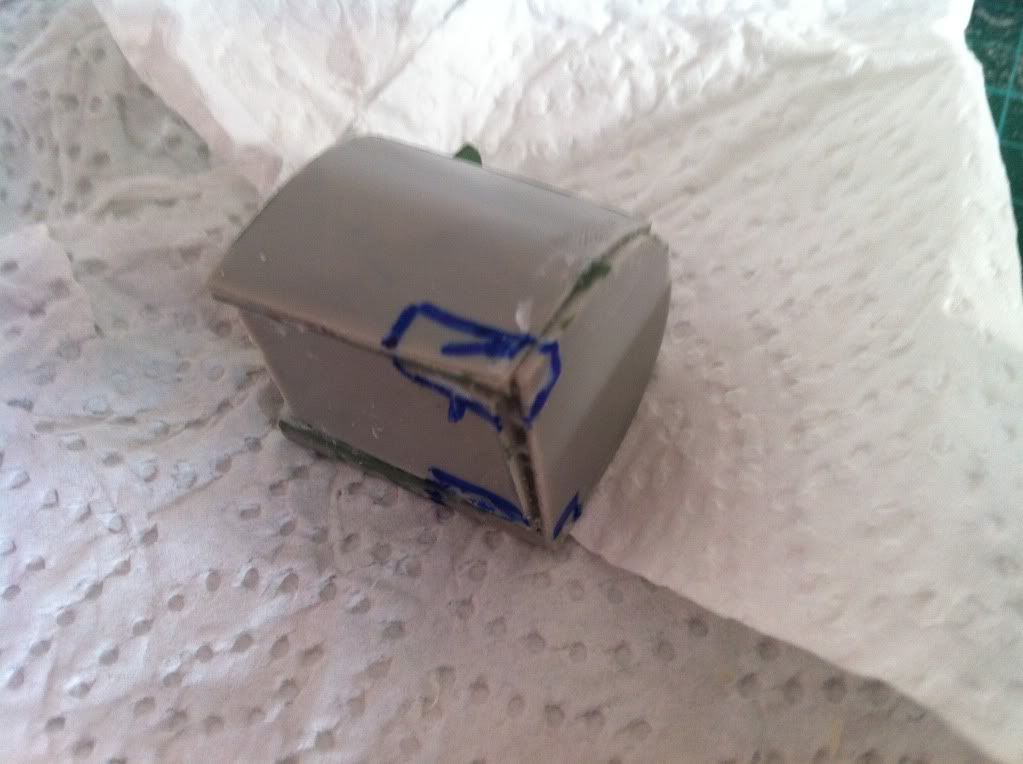
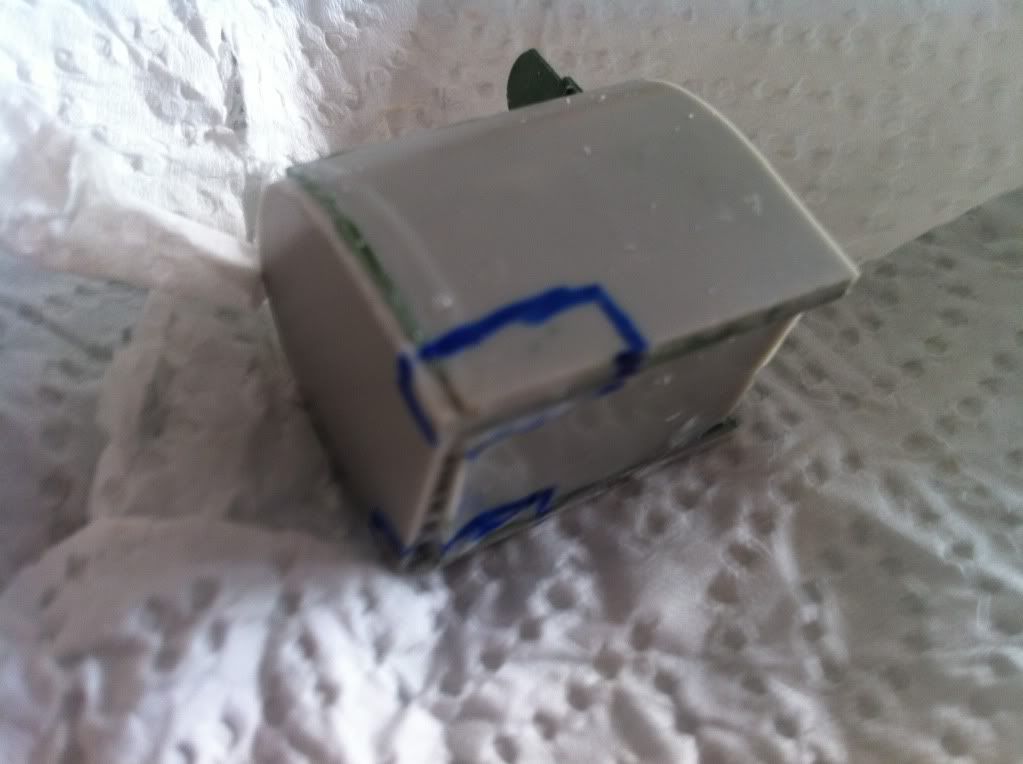
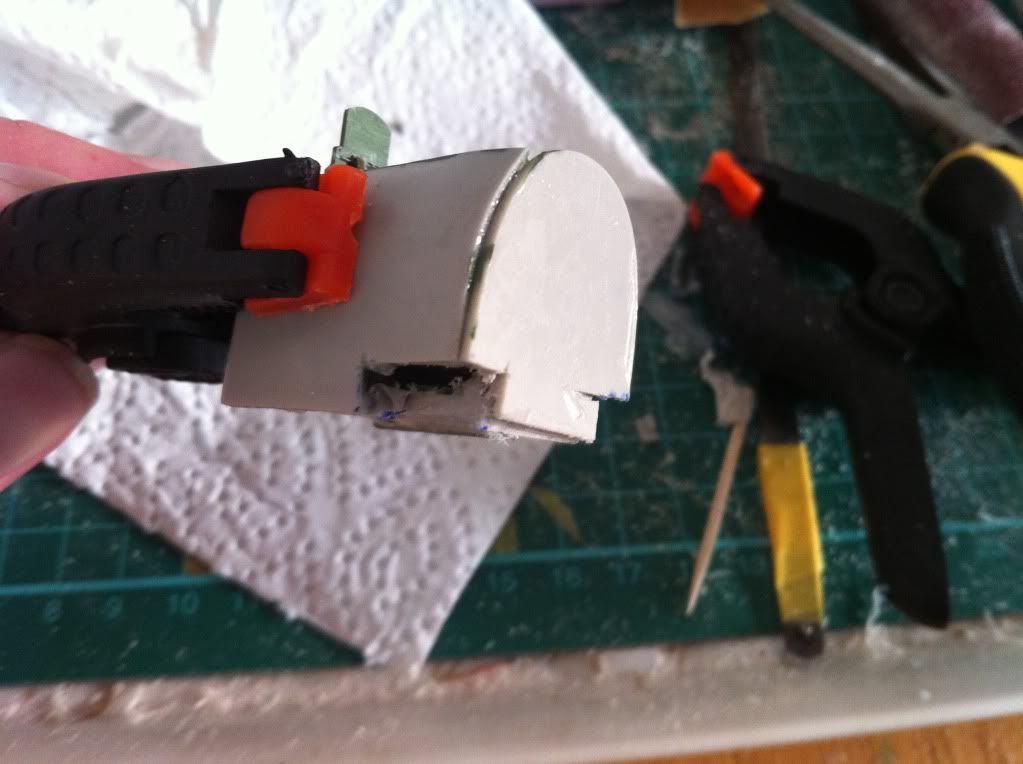
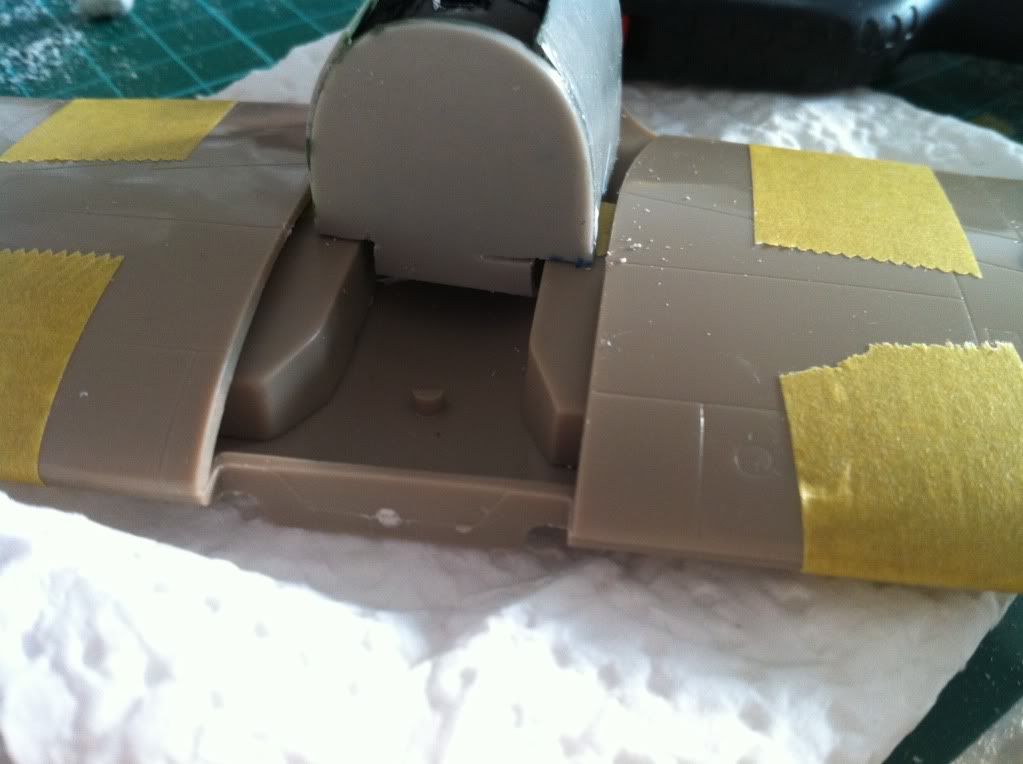
As stated before the cockpit fouls on the undercarriage bays so surgery is need the bit that need cutting out the bottom may need sanding but ill look at that later when I'm ready to button it all up.
And the finished result
That's a better fit.
Now on to sanding the fuselage half's and the cockpit sides to get it to fit there.
Nice surgery to get everything together! Looking very good so far. Can I recommend the PE cutting tool myself and Lee have which stops the stuff becoming food for the carpet monster. I found it at Sprue Mart here http://www.spruemart.co.uk/index.php?pa ... t&Itemid=1 but I am sure there are other suppliers as well.
Thanks guys. Yeah Jim can't go wrong for a pound just have to be careful when using them on fuselage halves they have a tendacy to slip and go flying of if not careful.
I'm interested in seeing how you fix these Nige, I have a BF 109 that I want to start in the near future and I haven't build an aircraft since I was a wee lad.
Watching you knock this together could be helpful buddy.
Lots of pics if it isn't too much trouble?
Sorry but this will be a photo heavy update for Coen and trying to deal with gaps, steps and seam lines.
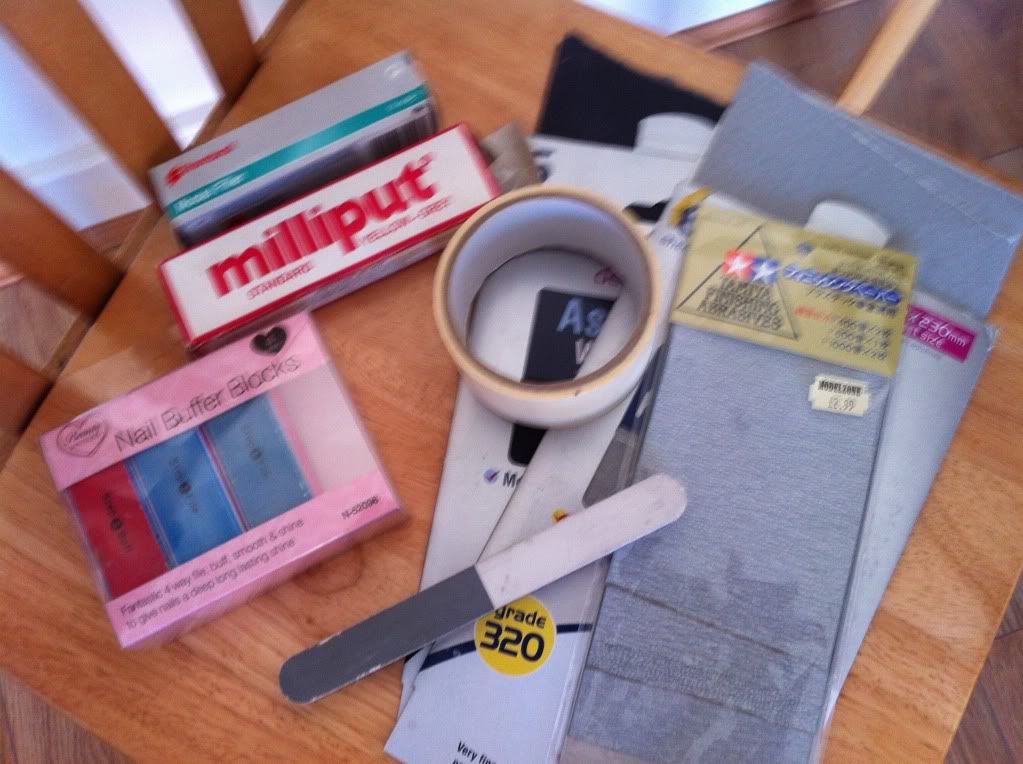
These are just some of the tools and bits and bobs Ill be using
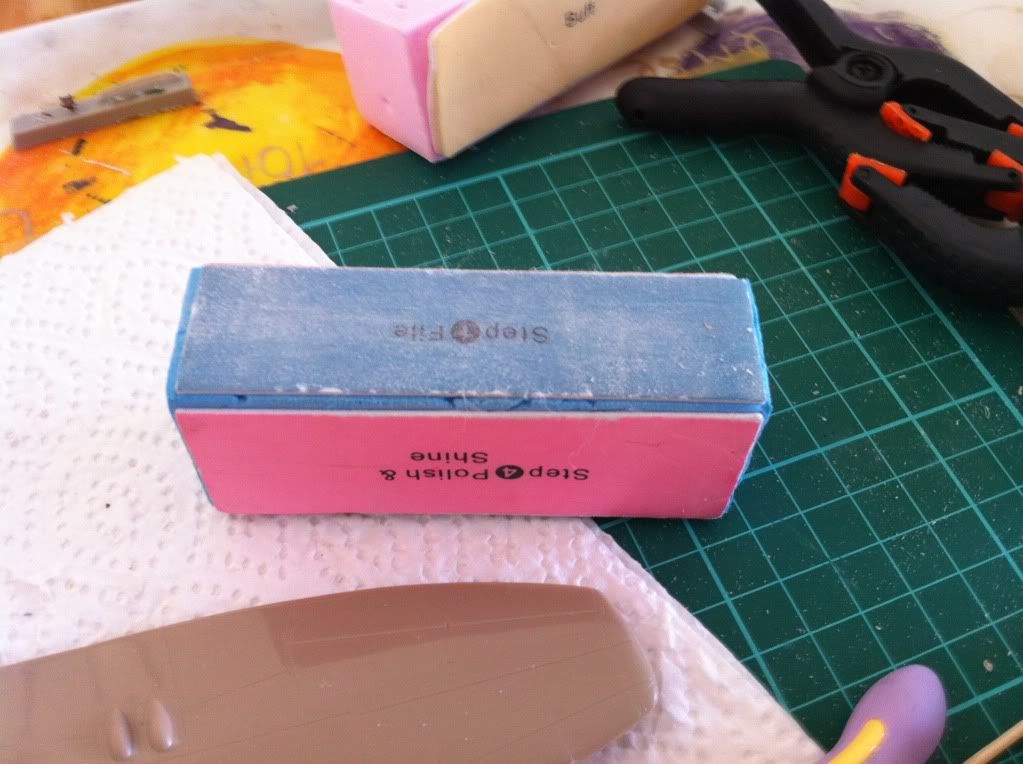
These next two are pound land buys
Comes in a pack of 4
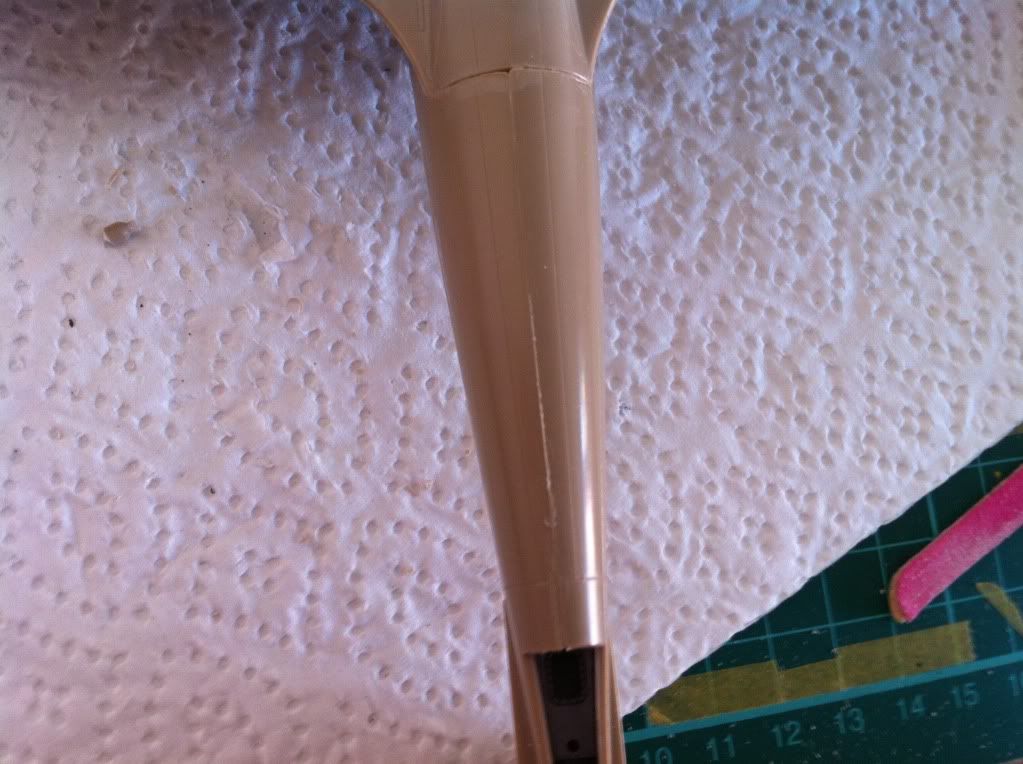
Before I've started
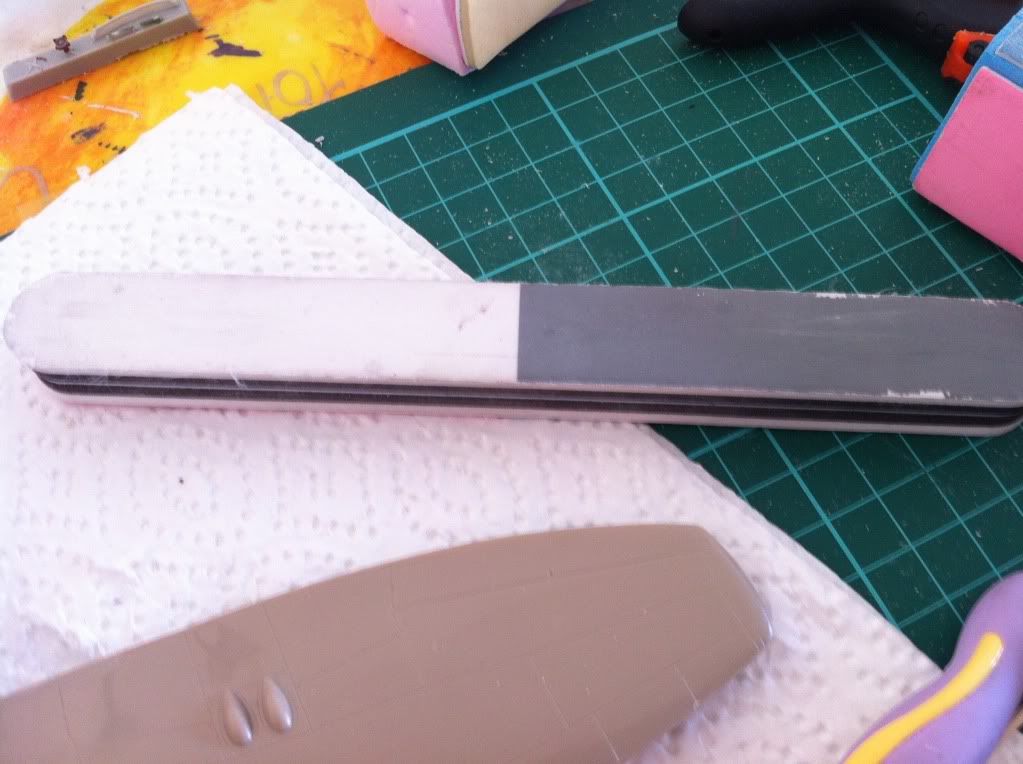
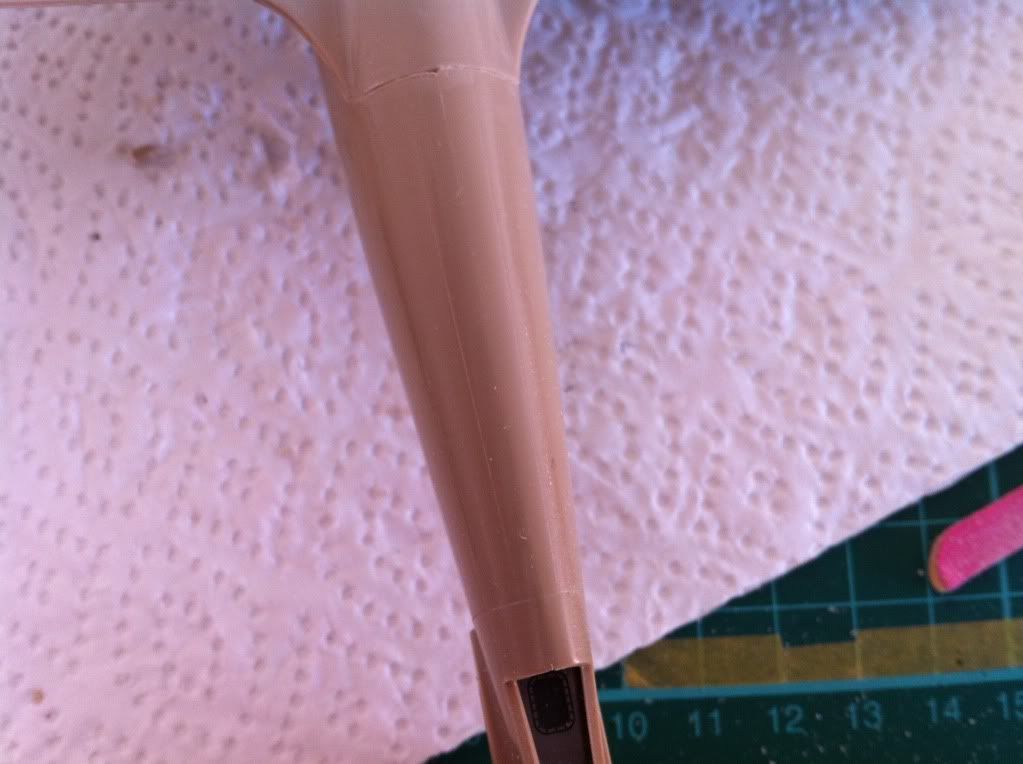
And after using each of the 4 sides of the block then the white of the nail file/sanding stick then the grey to buff up to a shine so I can see if there any more to do
The same was done on all the seam lines/joins
This one may need a bit of filler
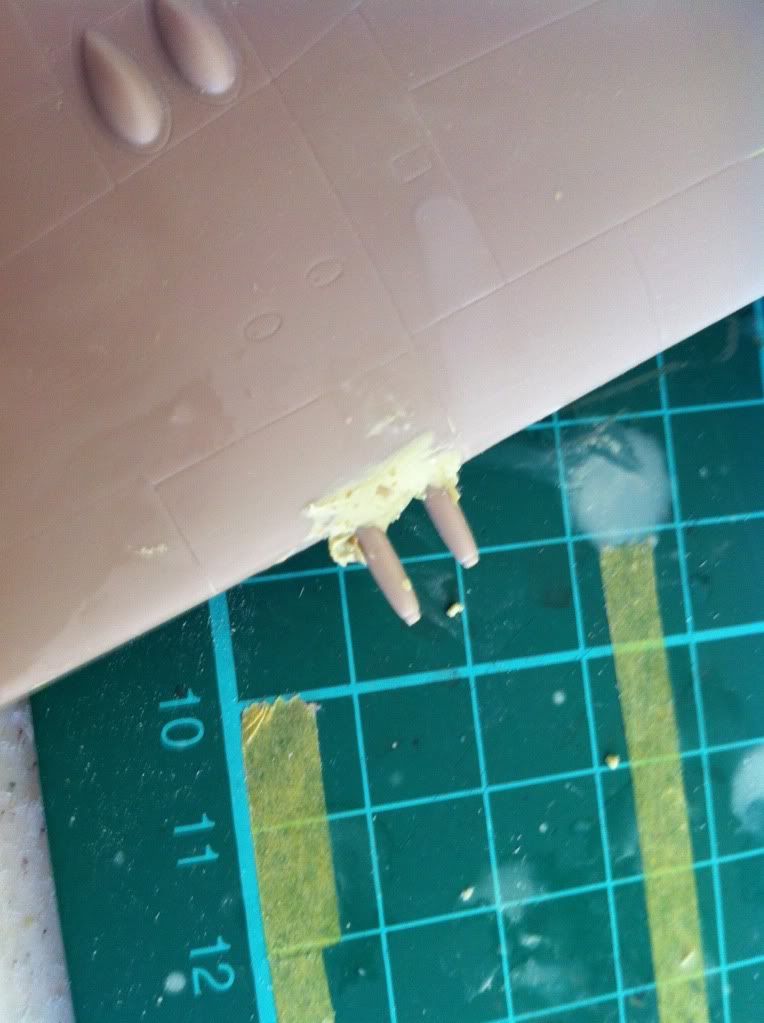
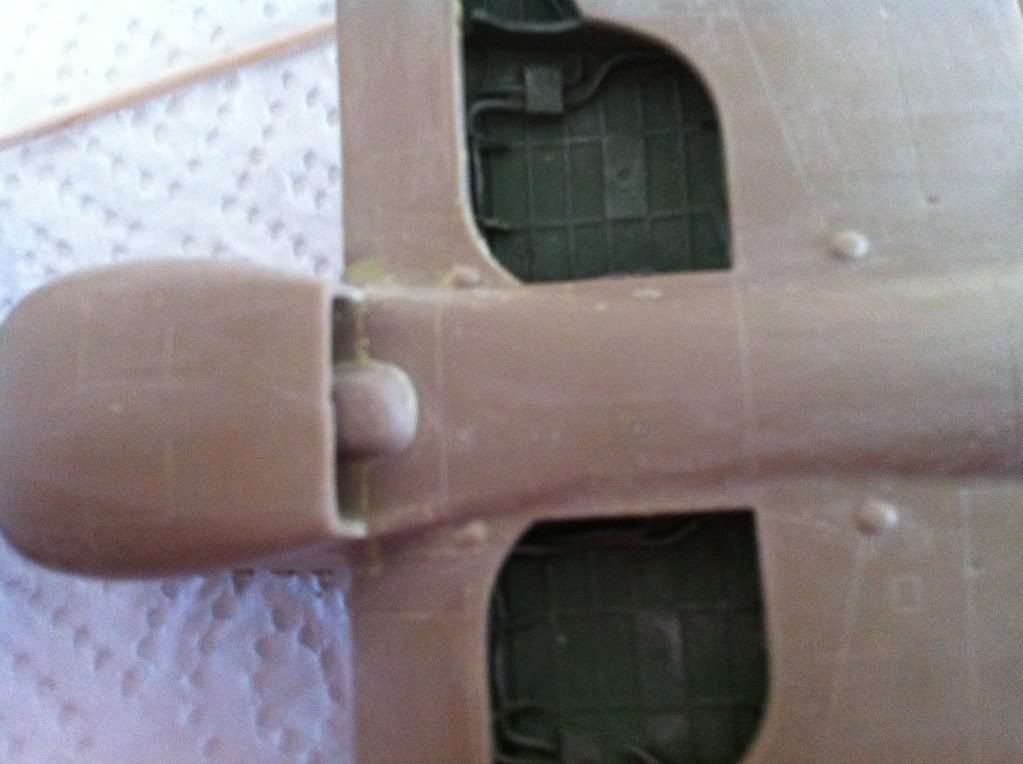
This will need filler to fill the gap
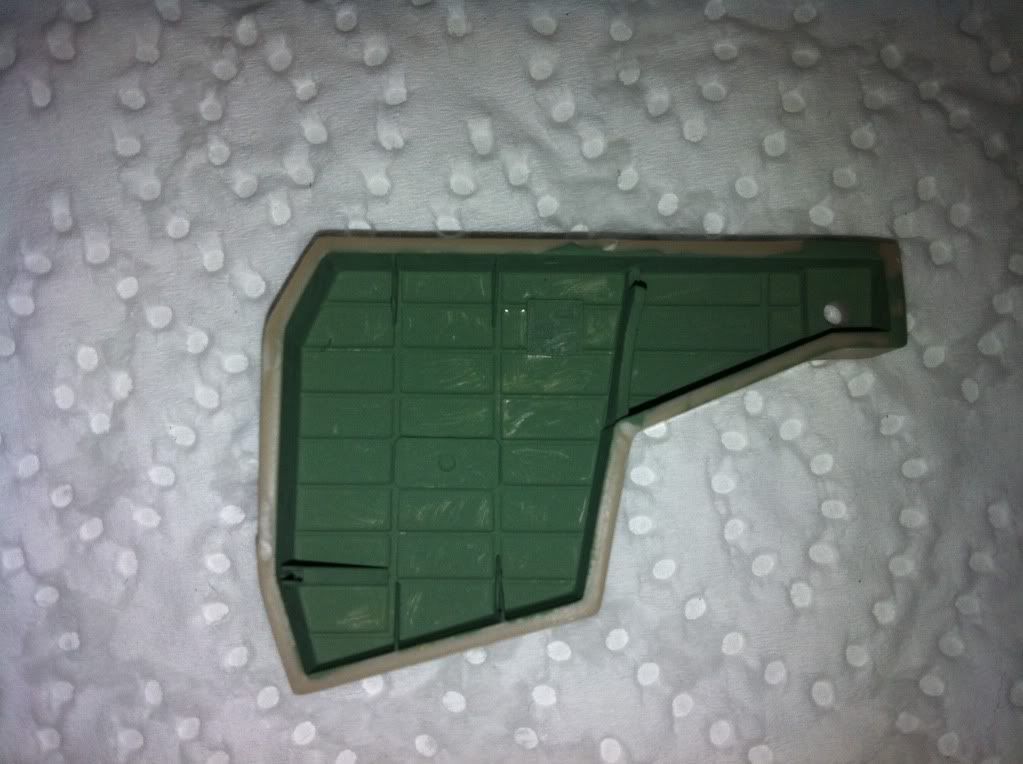
And so will this I used a cocktail stick/tooth pick (covering both bases ) with some sand paper rapped round it.
This what ill be using for the gaps well the 1st stage along with the mark 1 finger.
With it applied
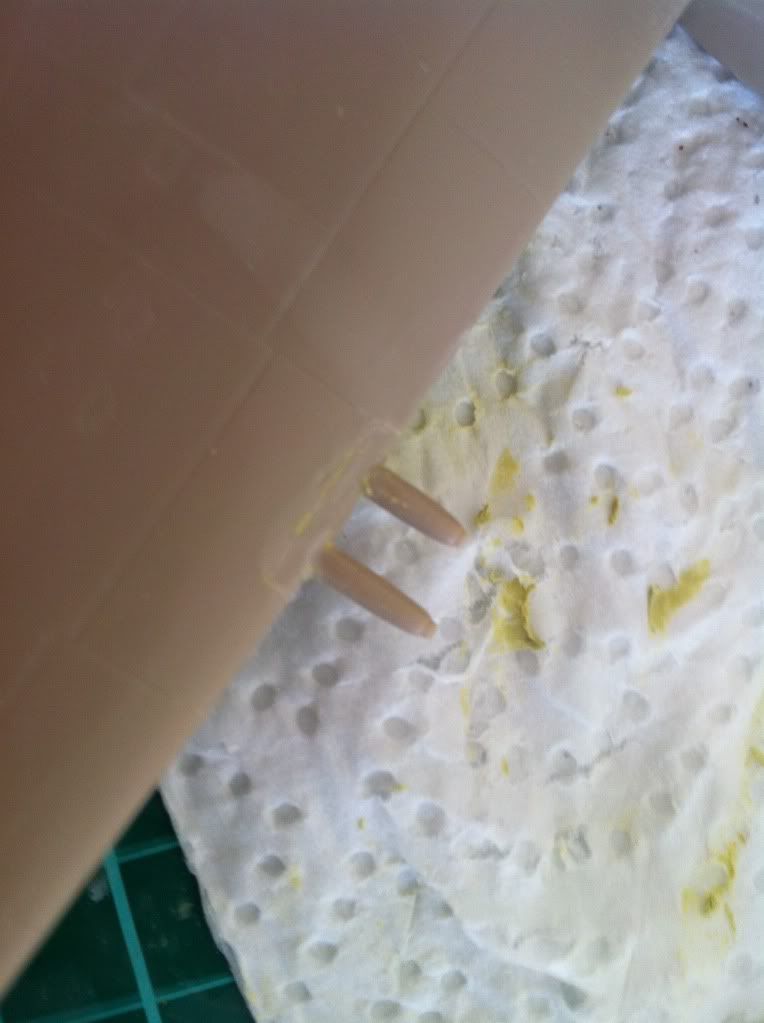
And then wiped the excess of with water and my finger.
I will let it dry over night and will apply some more tomorrow because it will properly shrink then will be sanding again so until tomorrow.
Coen some older kits from manufacturers like Revell, Airfix etc will need a good bit of attention like this. Modern Airfix and Revell kits in terms of fit are more often on par with the higher end Hasegawa/Tamiya/Academy kits etc.
Some can be really easy tiamya just tend to fly together needing very or no filler airfix are getting better the main problems tend to be the wings to fuselage areas well on WWII aircraft but to be honest I have found major problems on revell kits the two I've done lately the a-10 and the mosquito both 1:48 needed a lot of filler they were a very bad fit.
This kit is more of a problem because 1 it's a limited run kit so no location pins and 2 the chin is fiddly and also with the resin cockpit it needs a lot of filling sanding.
If anyone was to pick up a aircraft for the 1st time the best ones to try would proberly be and airfix spitfire, Me 109 or maybe a hurricane nice simple kits for beginners.
Ill post more when I do the rest Coen and I hope this helps.
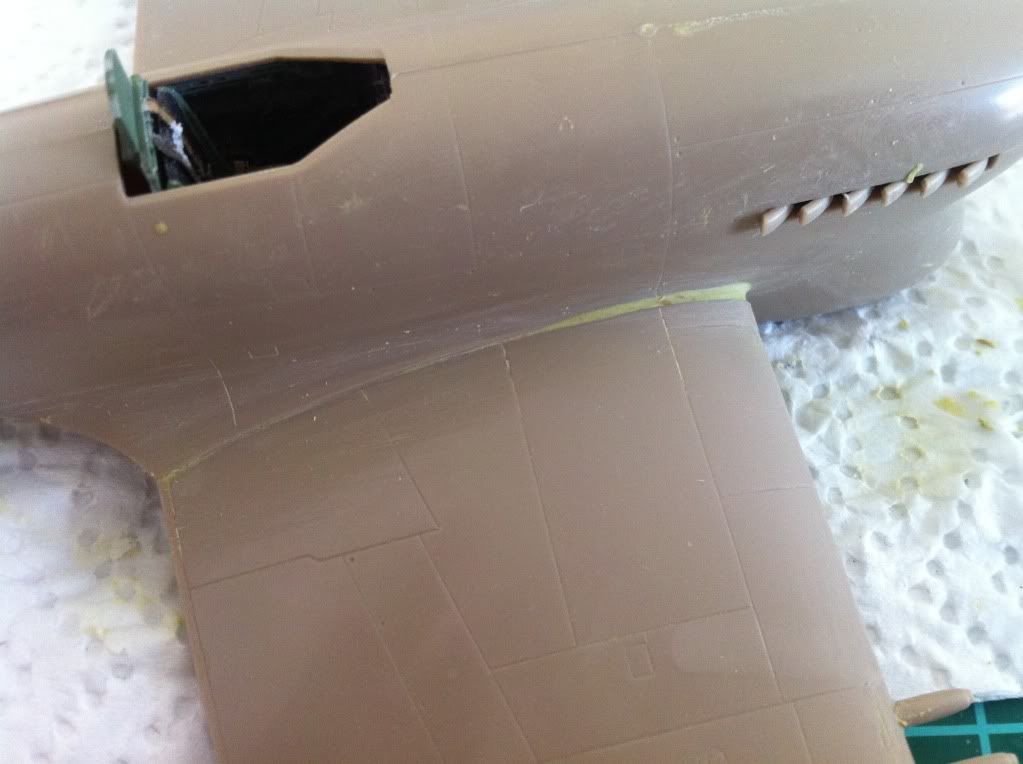
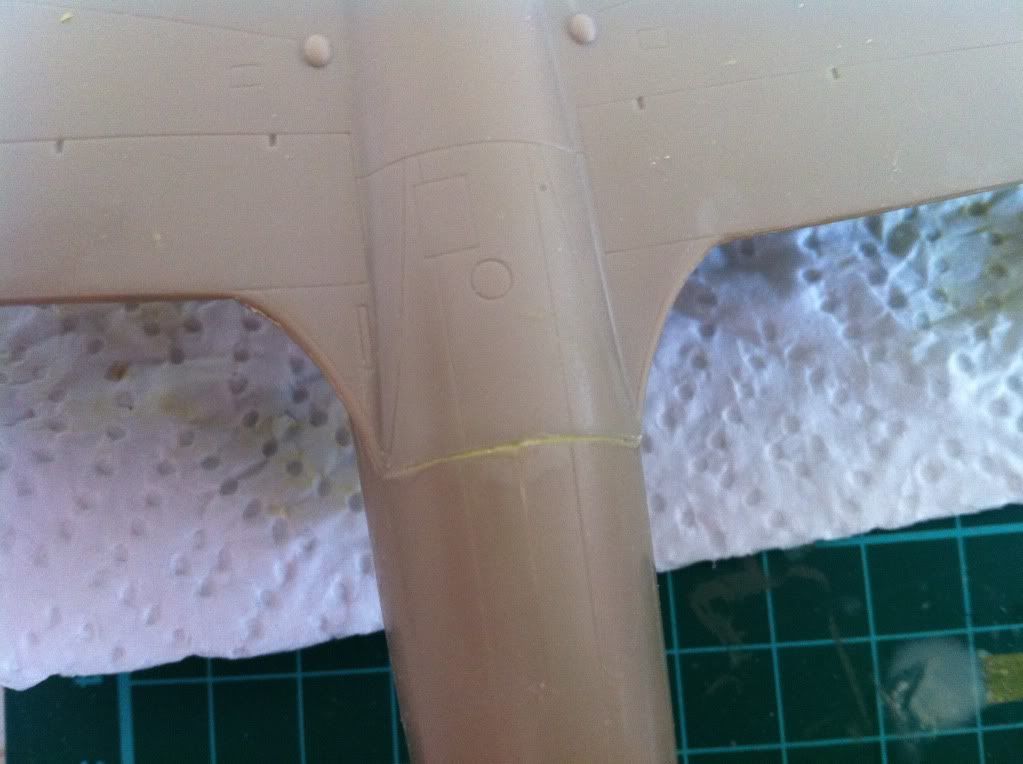
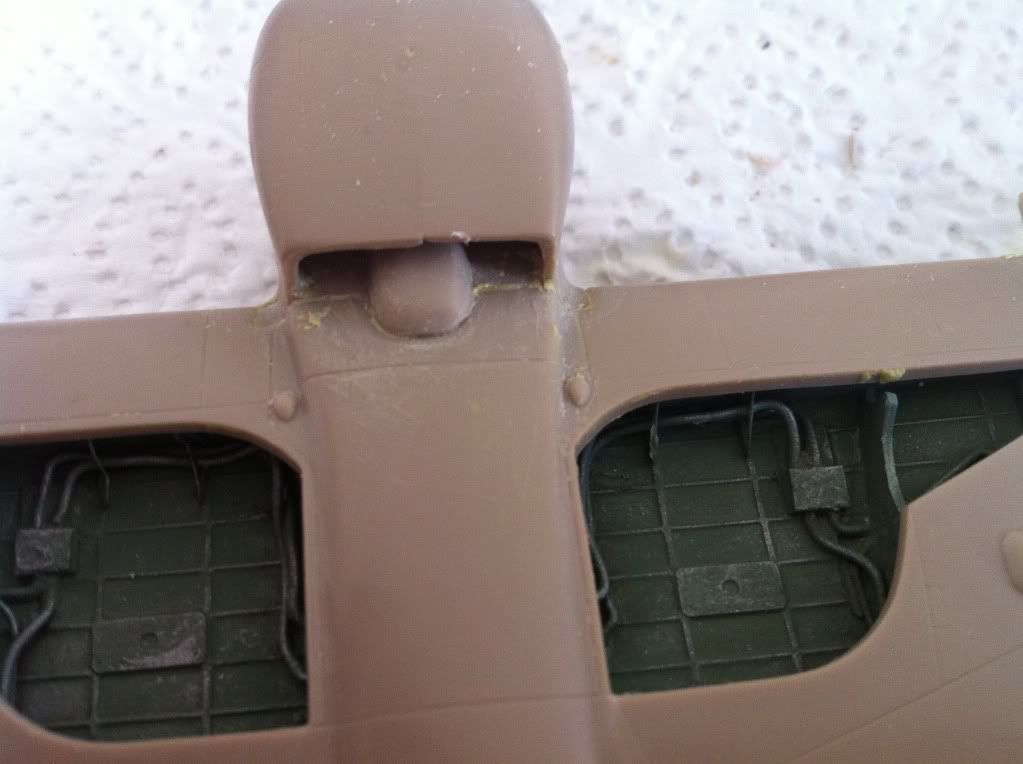
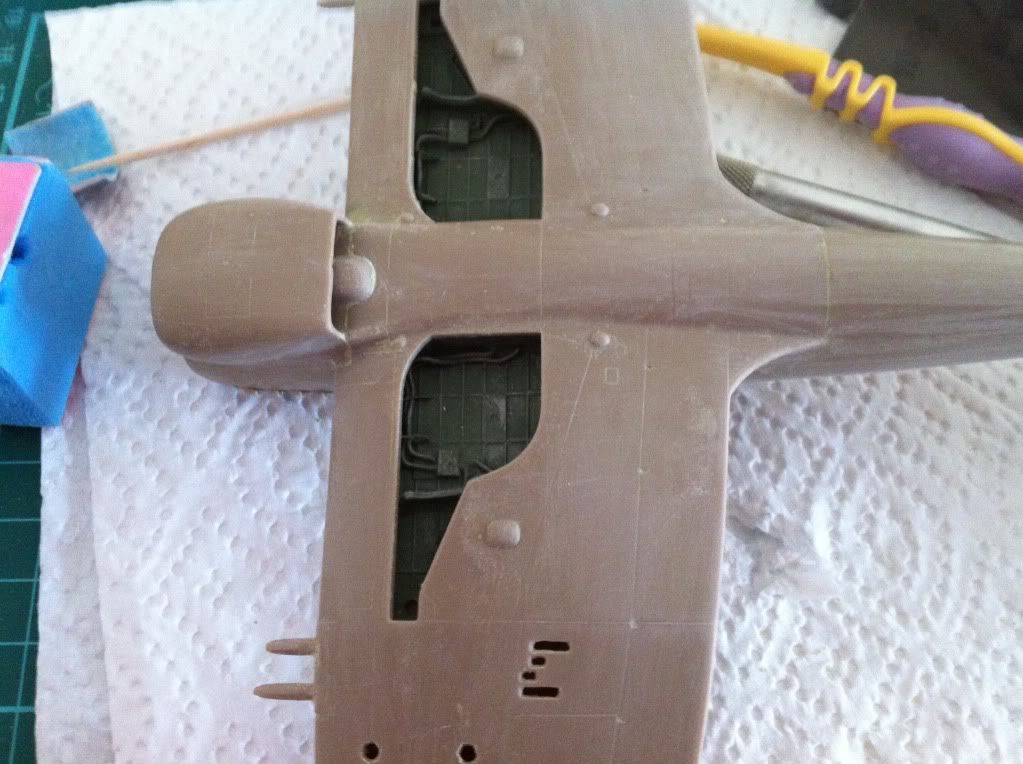
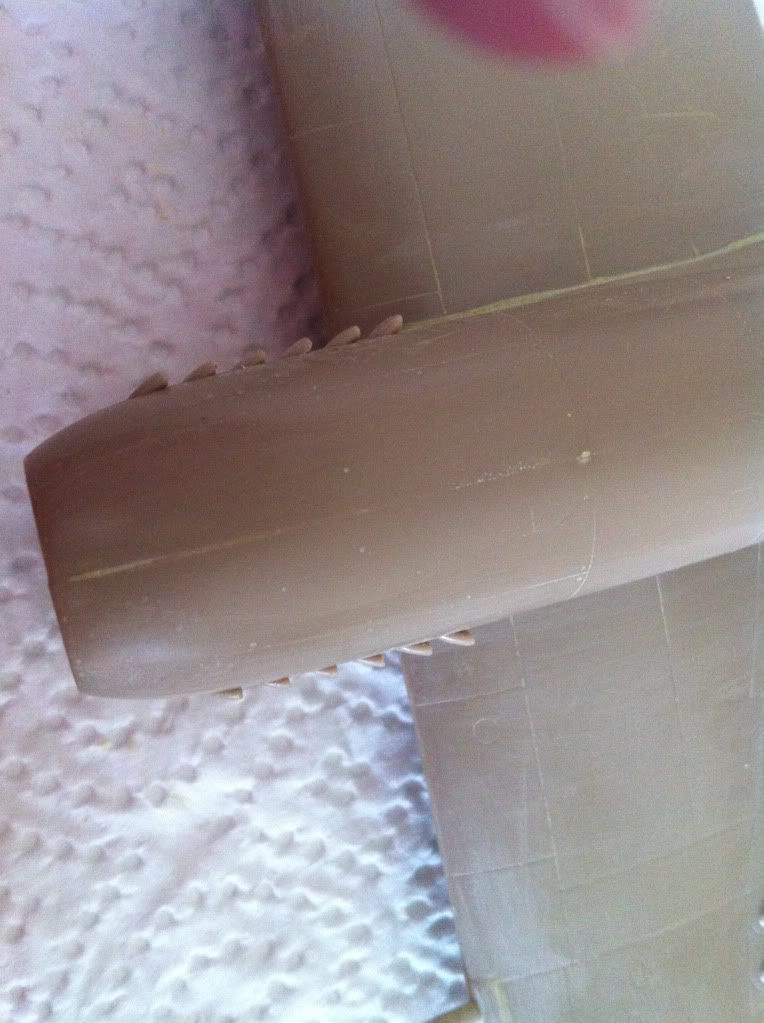
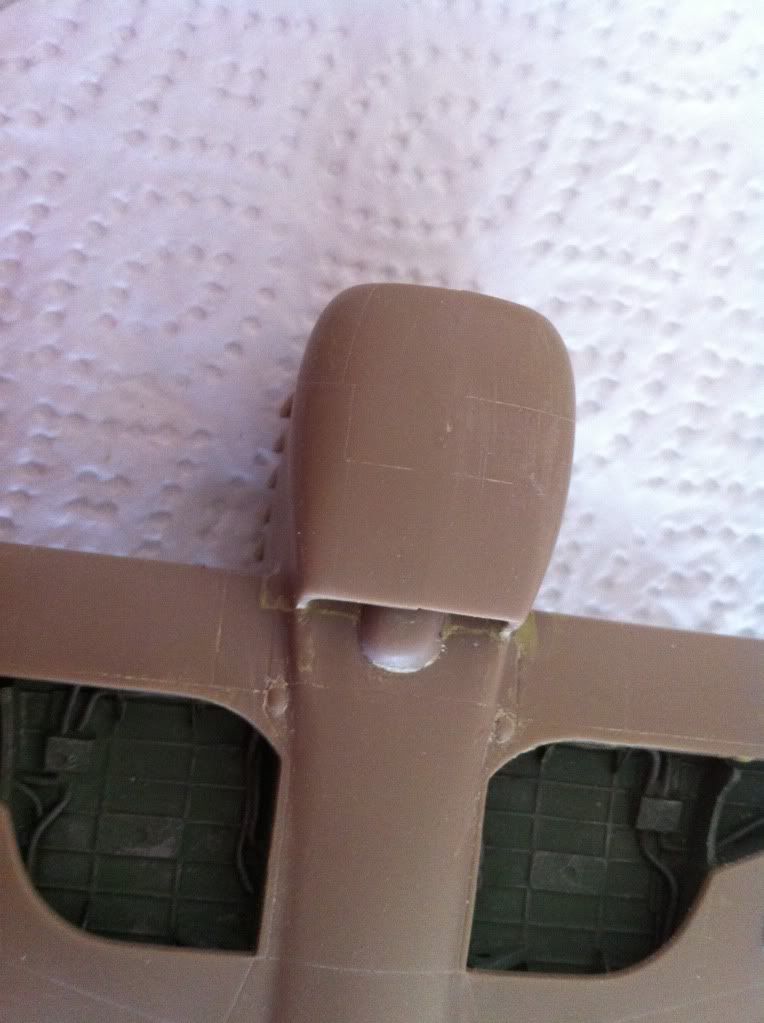
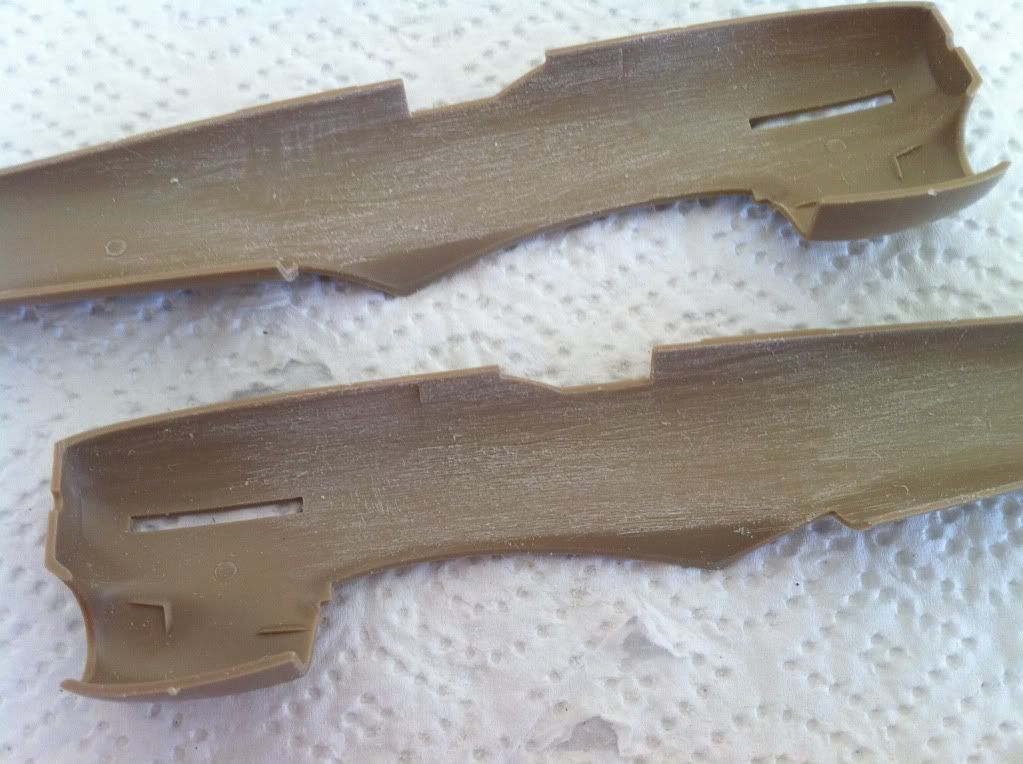
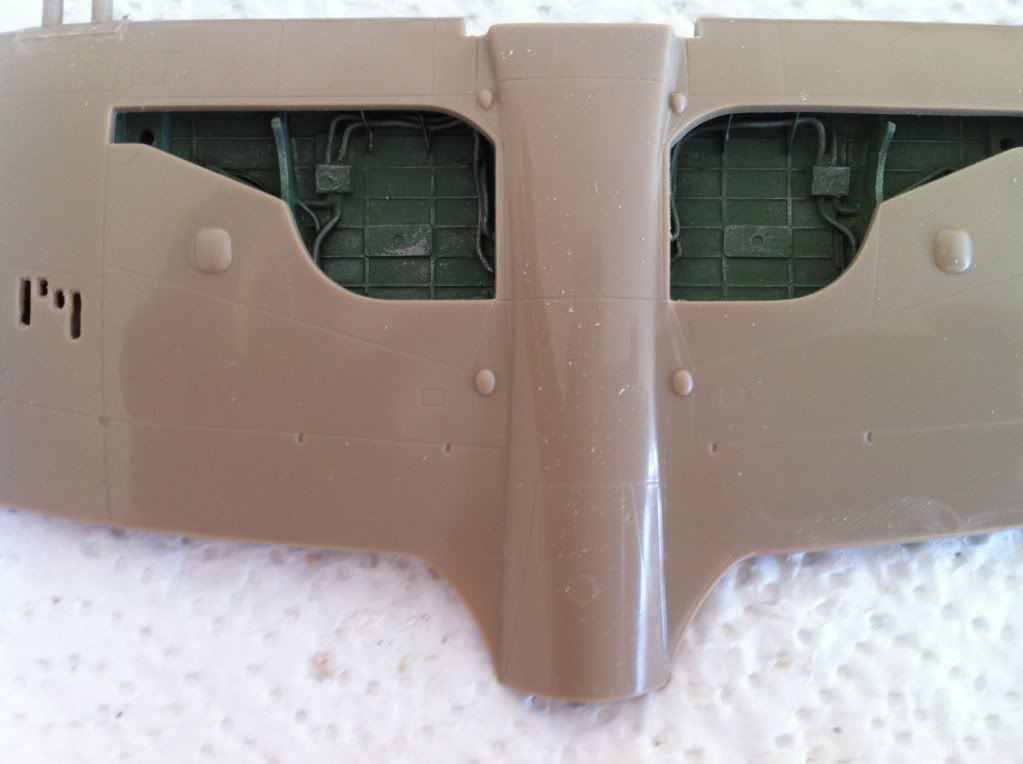
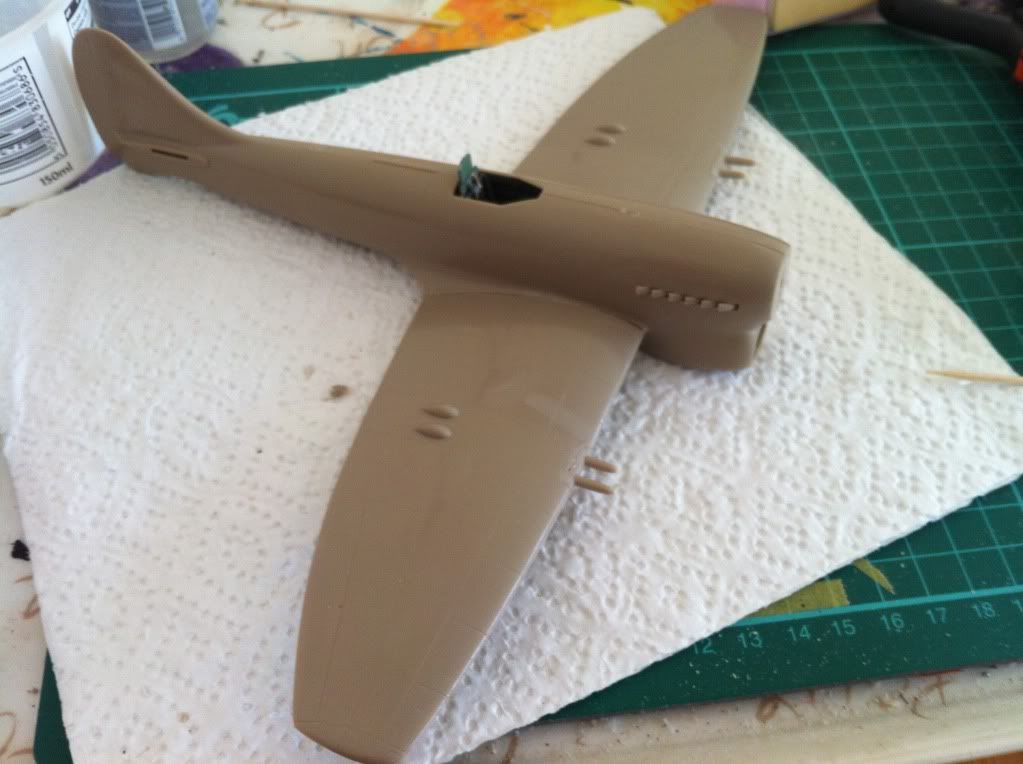
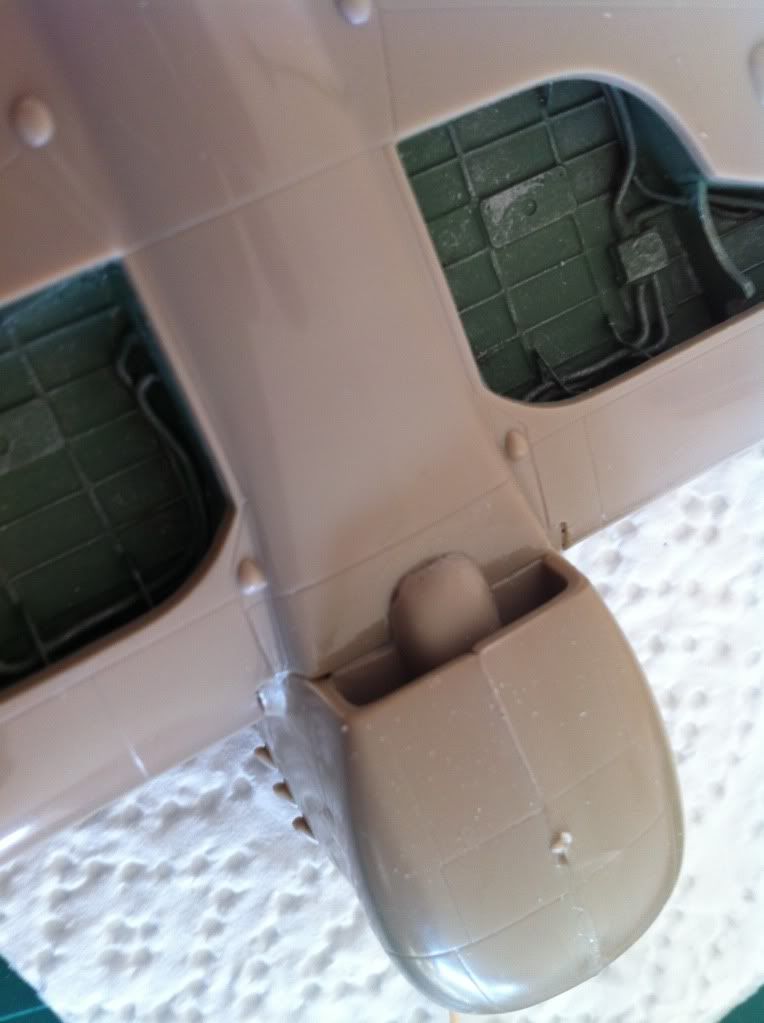
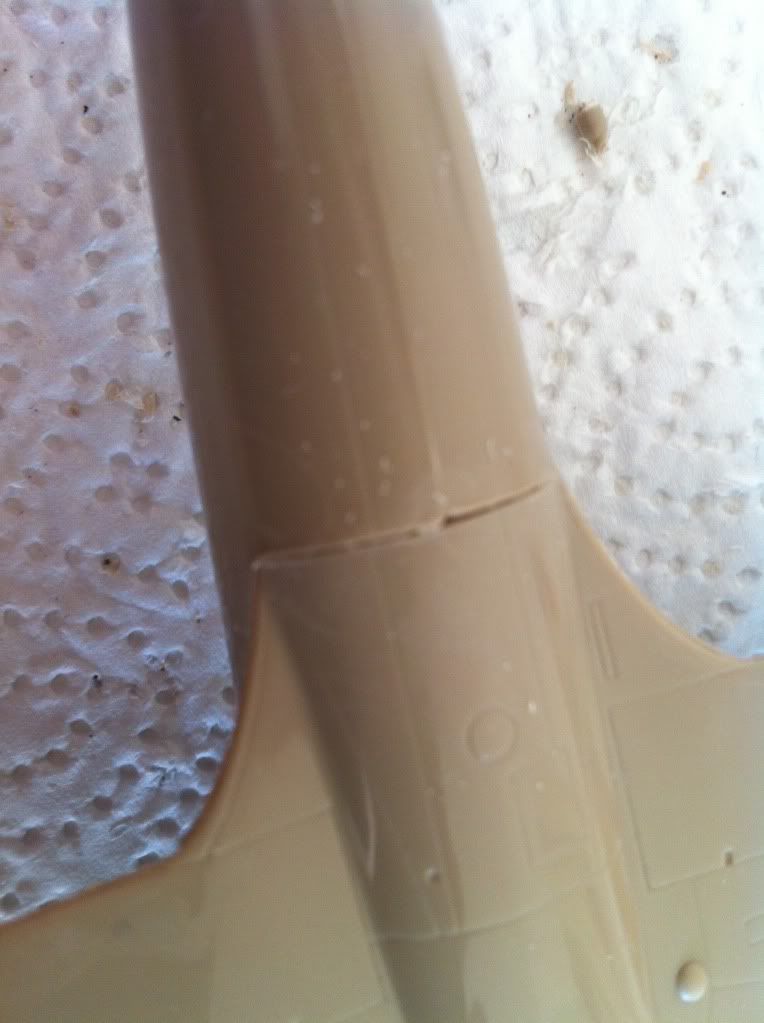
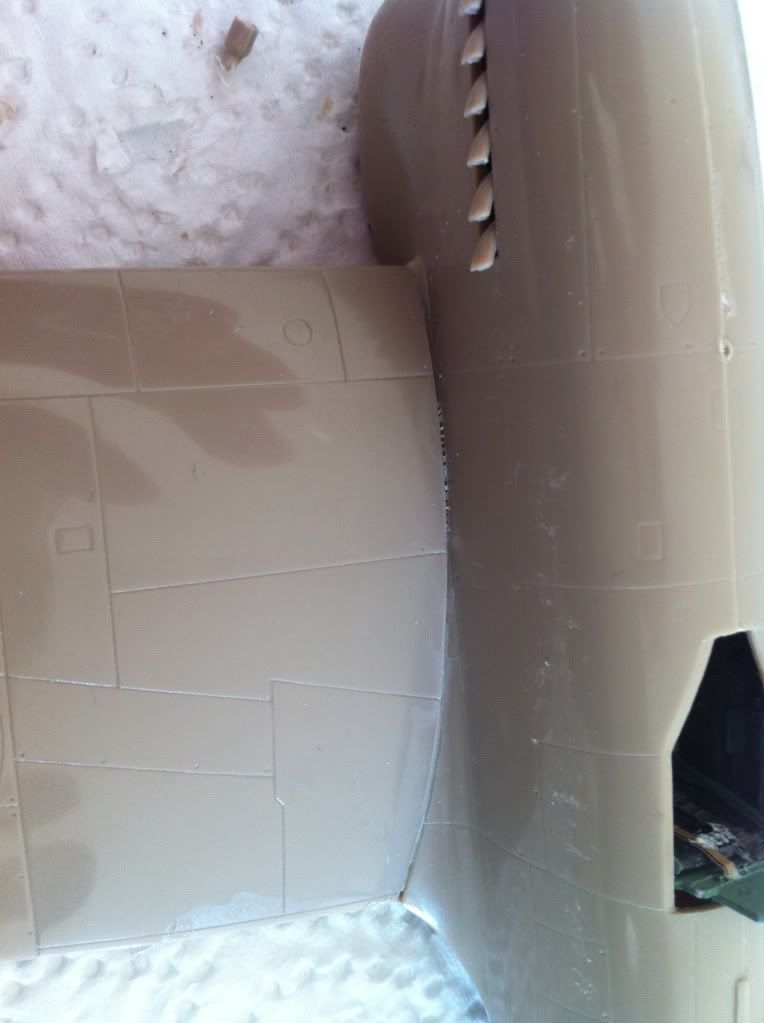
Right it did need more filling so that's done and all sanded back and the whole airframe sanded down.
These seam lines should be invisible when primed (hopefully)
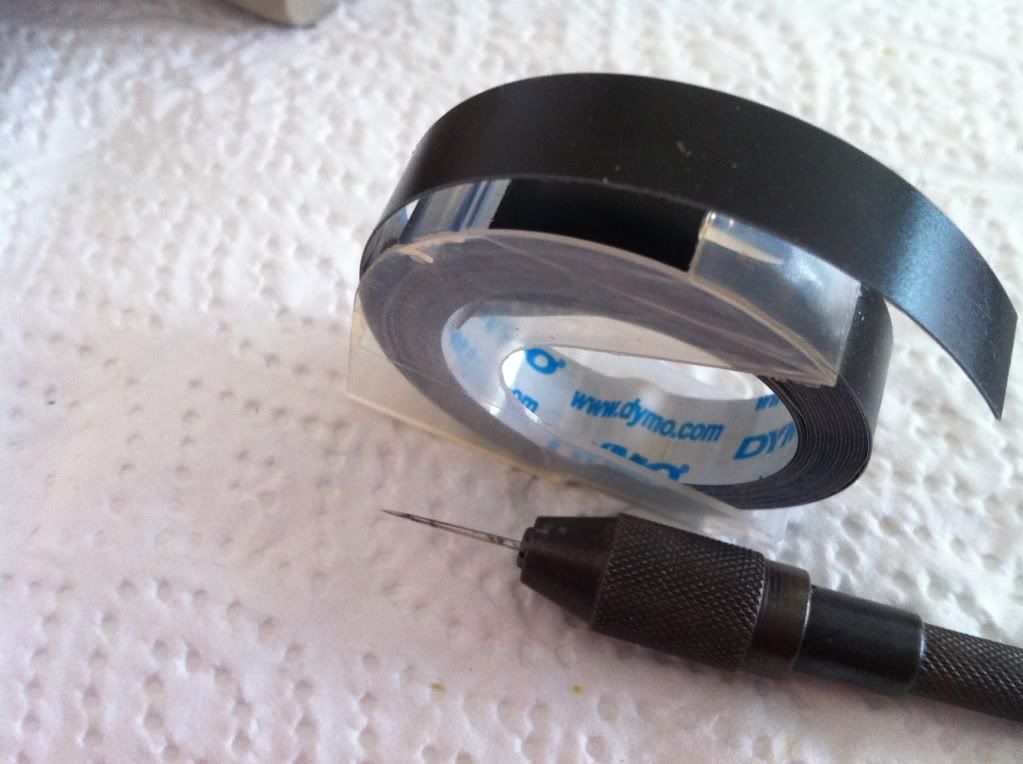
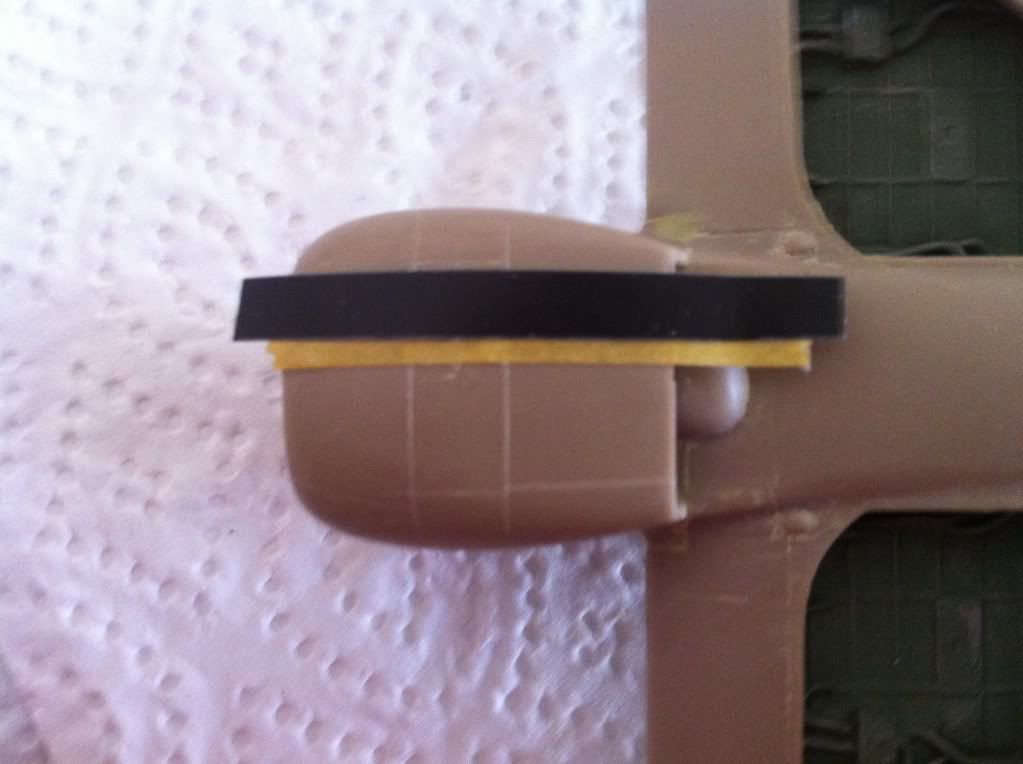
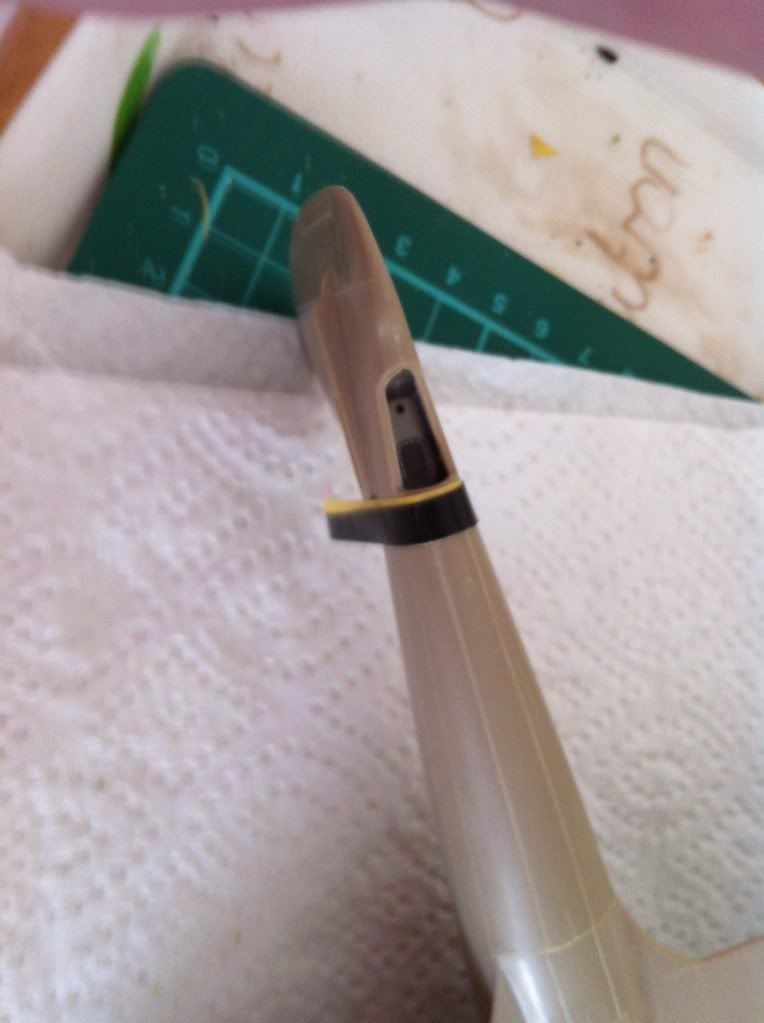
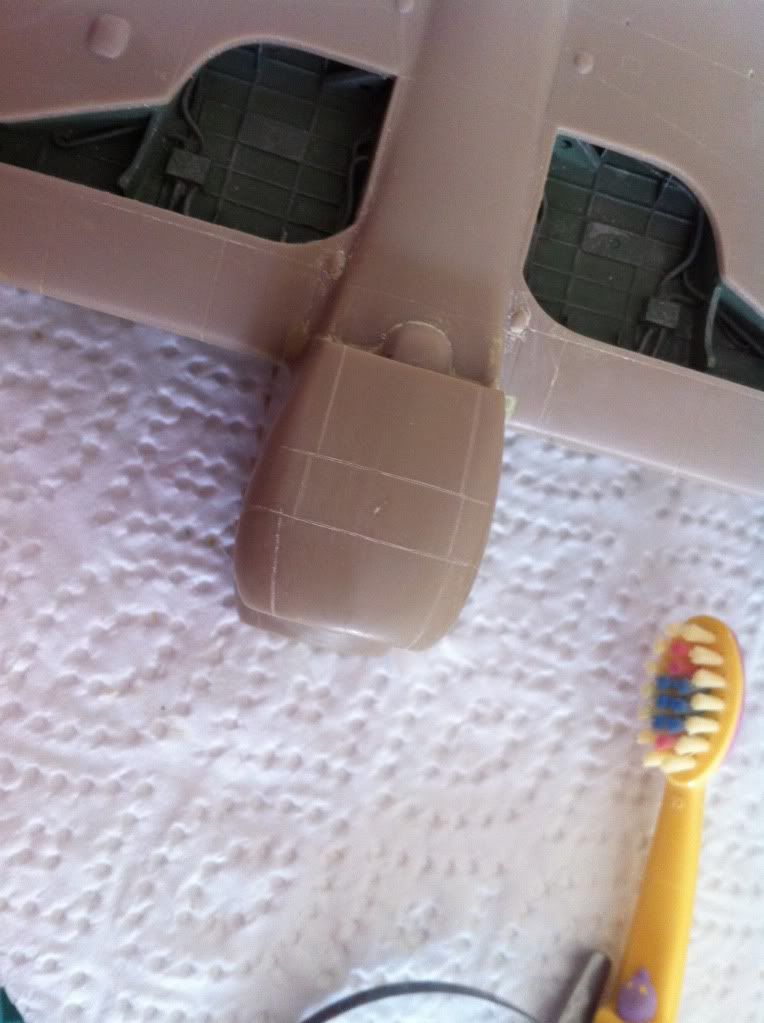
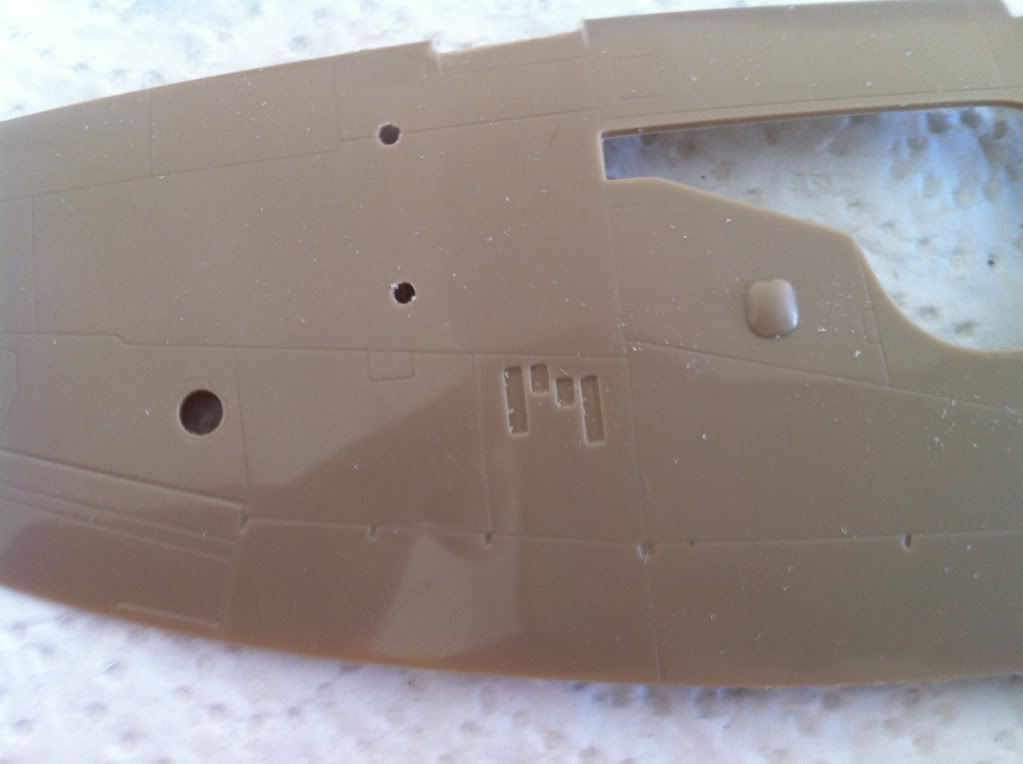
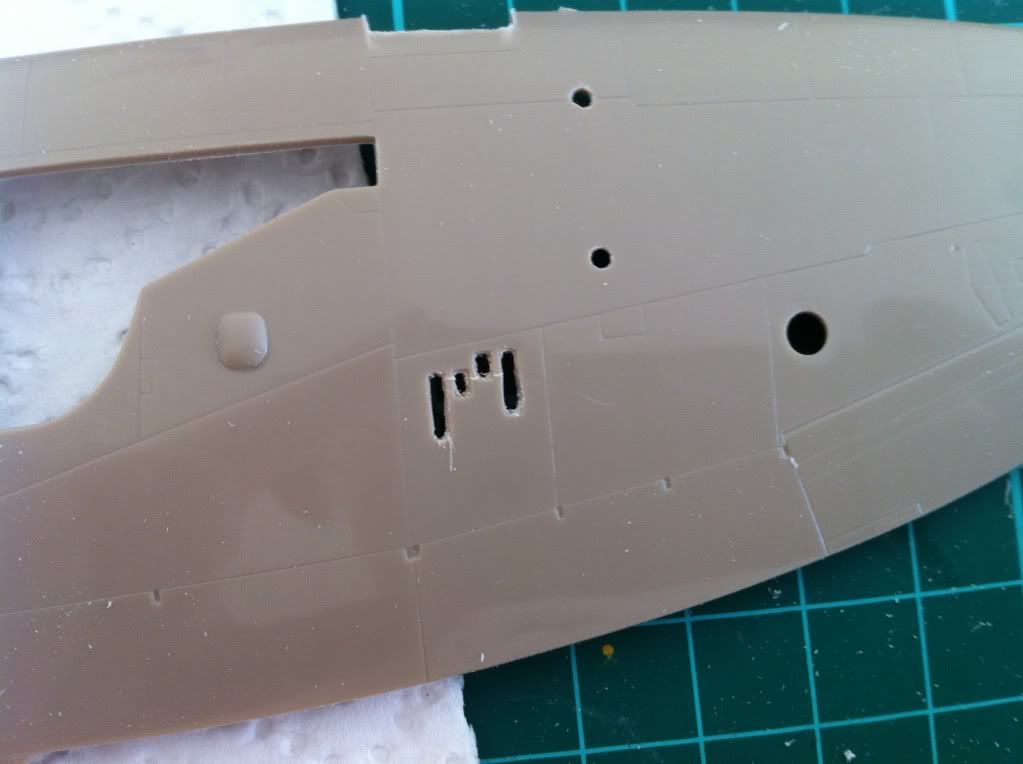
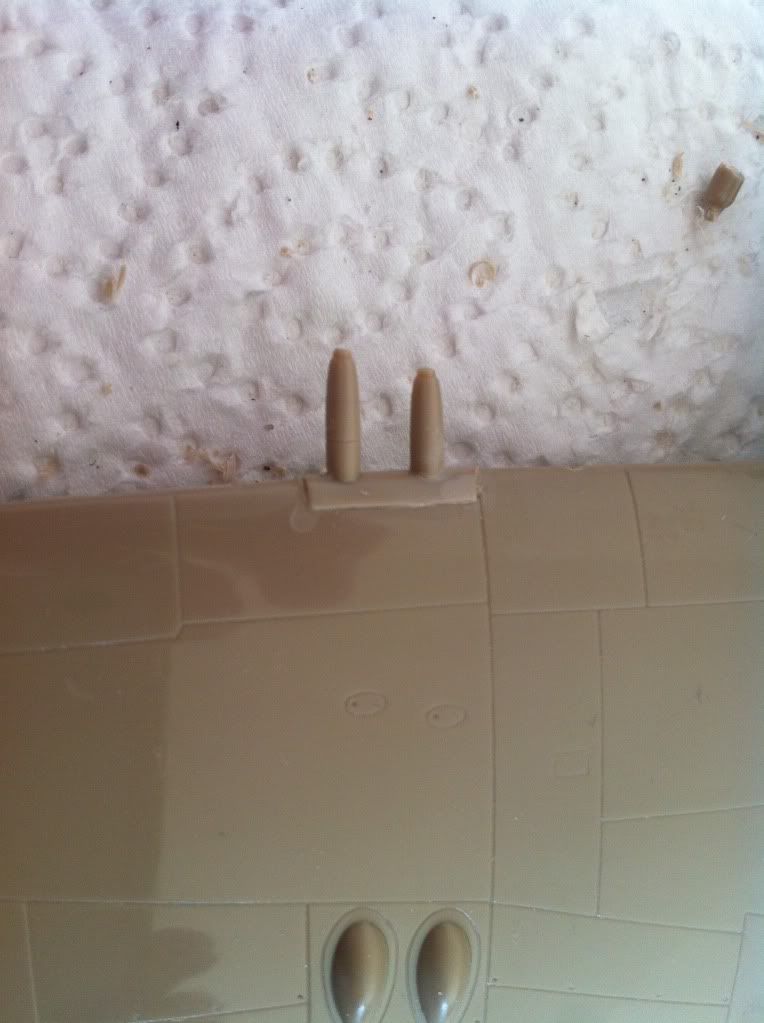
Some detail needs putting back so out with the dynamo tape and a pin vice fitted with one of the wife's old needles I bent the end of the needle slightly make the angle to hold the vice a easier
If you use it with tiamya tape you can use it more times I find
And the finished result
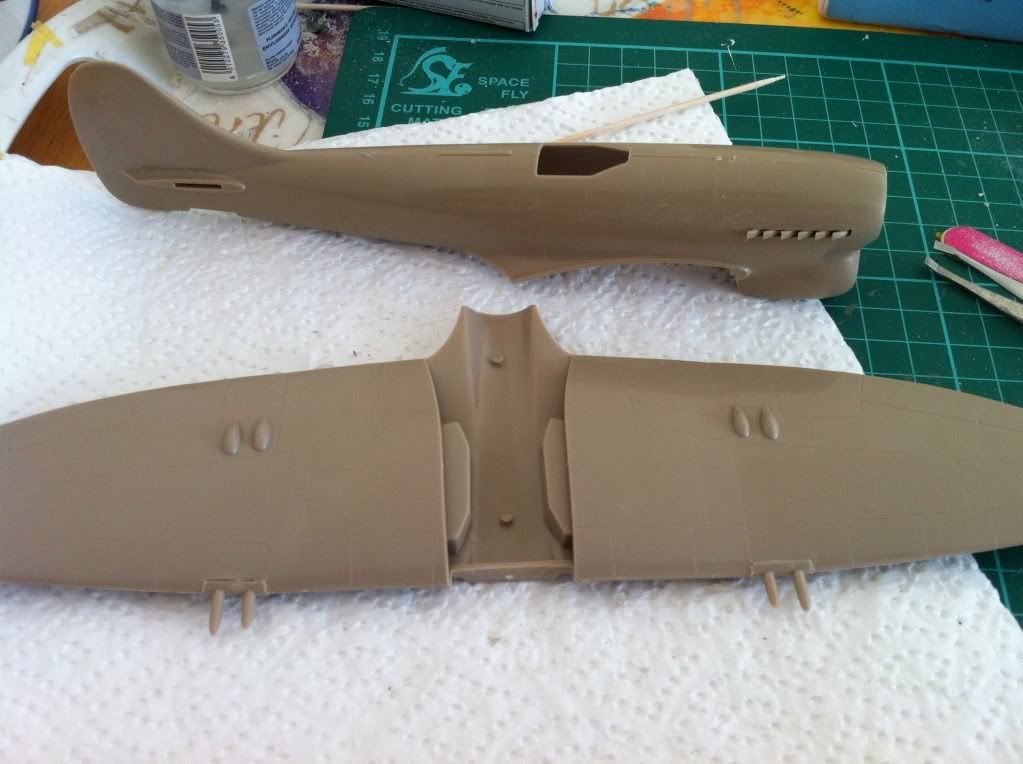
Next step is to prime the model once I've put the tail fins and drop tanks on and check for the fit then if need after primed maybe more sanding.























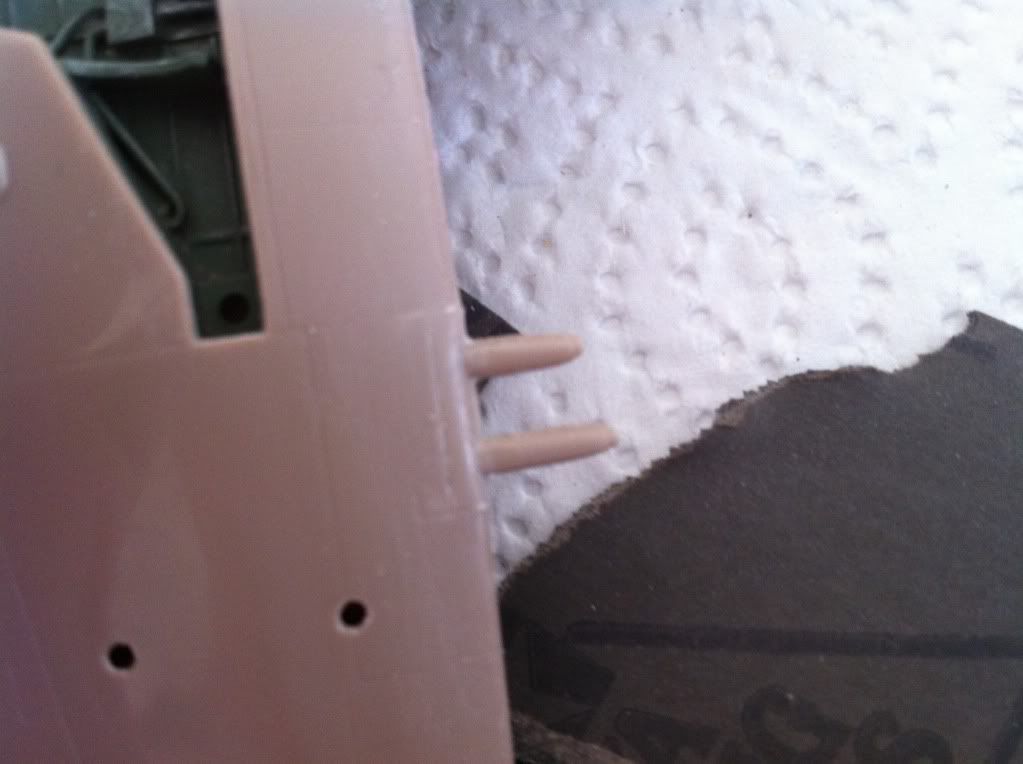
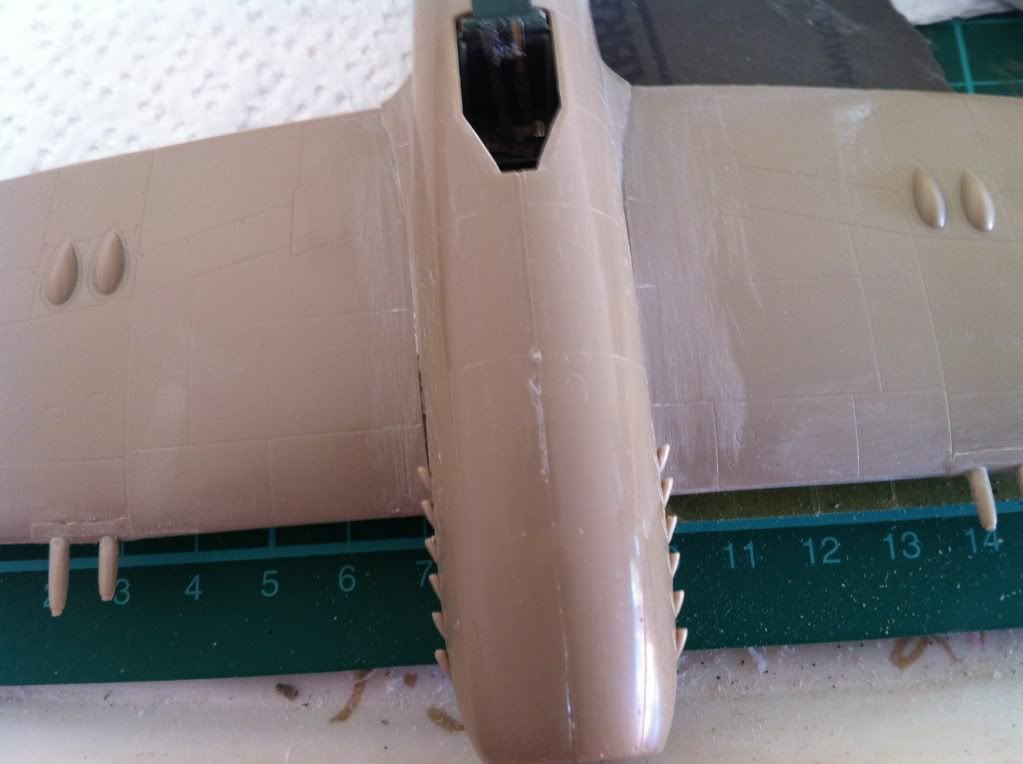
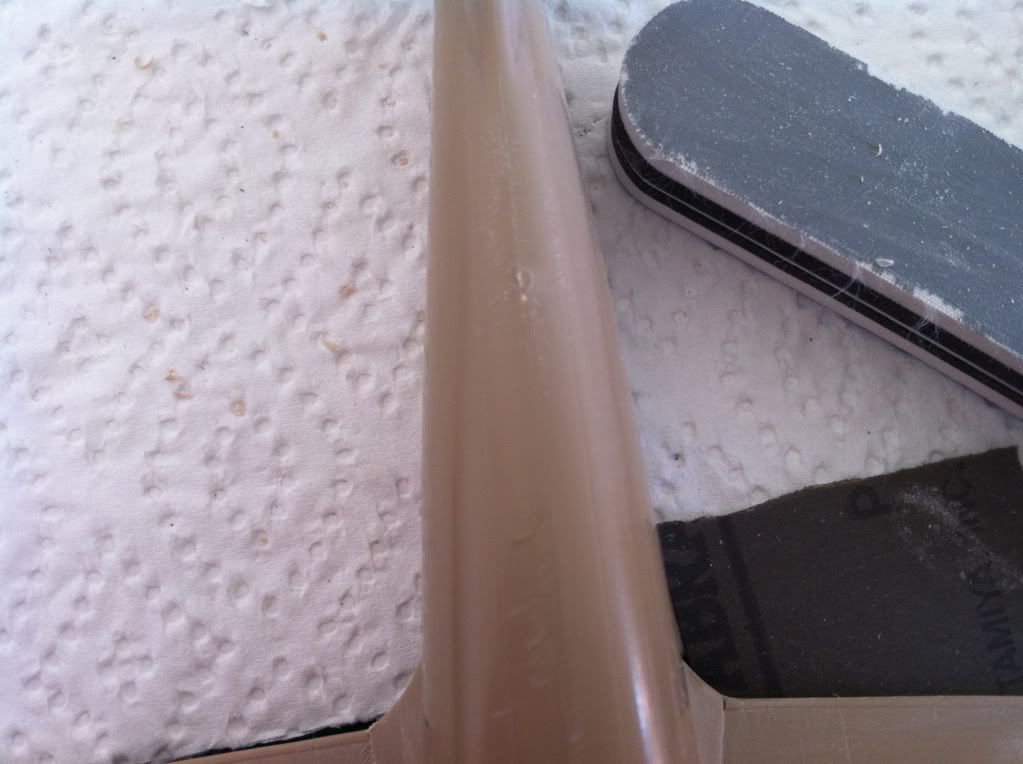
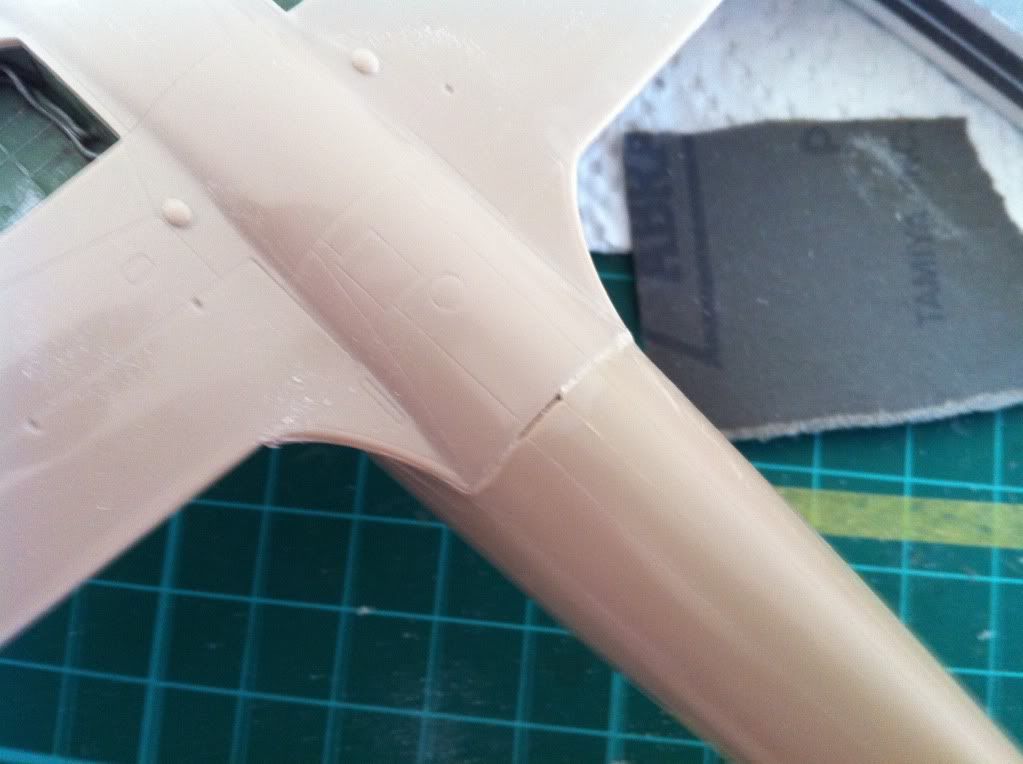
 ) with some sand paper rapped round it.